Newsroom
Former Groq Engineers Sue Board Over $20 Billion Nvidia Licensing Deal
6 October, 2026 / News / AI / Tags: groq, nvidia, stockholders, delaware, engineers
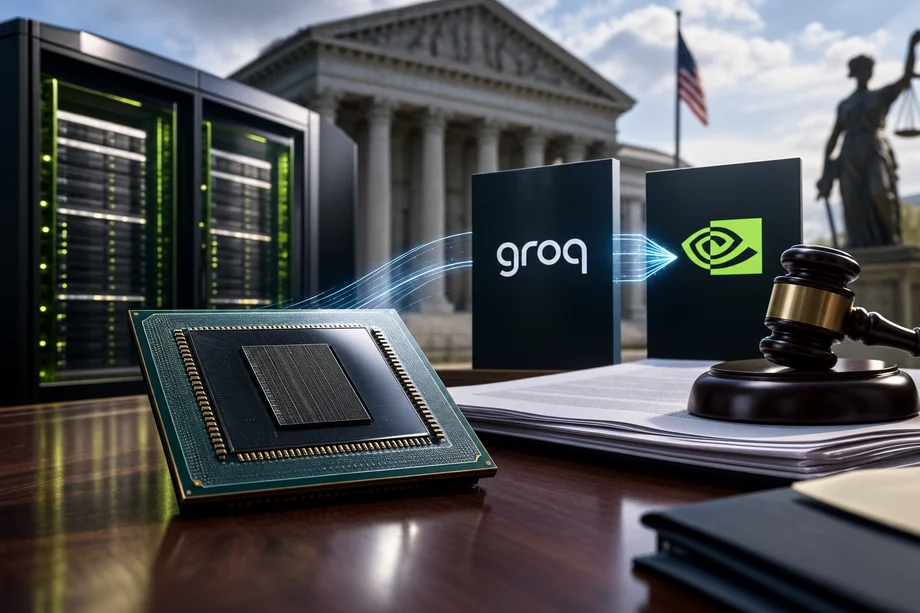
Two ex-engineers claim Delaware directors favored insiders in a 2025 non-exclusive technology license that sent most staff and core assets to Nvidia while shortchanging other stockholders
Two former Groq engineers who retained shares in the artificial intelligence chip startup have filed a proposed class-action lawsuit against the company’s board, alleging fiduciary breaches in a December 2025 transaction with Nvidia valued at approximately $20 billion. The complaint, unsealed Monday in the Delaware Court of Chancery, asserts that directors structured the arrangement to benefit insiders and affiliated investment funds at the expense of common stockholders.
The case, captioned Serebrin v. Ross, was filed under seal on September 29 and made public on October 5. Plaintiffs Benjamin Serebrin and Joshua Rubin left Groq before the deal was announced but held equity that gave them standing to sue. They contend the board approved a transaction that effectively transferred Groq’s core technology and nearly all of its engineering talent to Nvidia while leaving remaining shareholders with a diminished company.
Deal Structure and Key Terms
Groq announced the agreement on December 24, 2025, describing it as a non-exclusive license of its inference technology, also known as language processing unit chips. Nvidia’s filings characterized the arrangement as providing access to that technology plus the hiring of certain employees, without acquiring Groq equity, customer contracts or products. The total consideration has been reported at roughly $20 billion, consisting of about $17 billion allocated to the license and an additional $3 billion in Nvidia restricted stock units reserved for employees who transferred.
Approximately 150 to 200 Groq engineers, representing a large majority of the technical workforce, joined Nvidia as part of the transaction. Founder and former chief executive Jonathan Ross and president Sunny Madra were among those who moved. Groq stated that it would remain an independent company under new chief executive Simon Edwards and would continue operating its GroqCloud platform.
Allegations of Conflicts and Process Failures
According to the complaint, a majority of the board was conflicted because of ties to investment funds that stood to gain from the structure, including BlackRock, Social Capital, Infinitum and Disruptive. Plaintiffs argue the directors failed to seek the highest available price, denied certain stockholders a required vote under Delaware law, and allowed senior leaders to receive preferential treatment through separate equity packages tied to their move to Nvidia.
The suit claims common stockholders were cashed out at an undervalued price for the remaining business, which later raised capital at a $3.5 billion valuation in a round that included Nvidia. Plaintiffs say the licensing label and employee transfers allowed the company to avoid formal acquisition rules while achieving a similar economic result. They concede that Delaware courts have not previously ruled directly on whether such reverse acqui-hire structures must be treated as change-of-control transactions subject to full fiduciary scrutiny.
Broader Scrutiny of the Transaction
The deal has attracted attention beyond the courtroom. A separate inquiry by the Justice Department into the arrangement has been reported, though its precise scope has not been publicly detailed. In February, Senators Elizabeth Warren, Richard Blumenthal and Ron Wyden cited the Groq-Nvidia transaction in a letter to antitrust authorities, calling for closer examination of licensing-plus-hiring structures used by large technology firms to absorb AI startups.
Nvidia declined to comment on the lawsuit. Groq did not immediately respond to requests for comment. The claims remain allegations and have not been tested in court. The complaint seeks to hold the former board and certain executives accountable for what plaintiffs describe as breaches that cost stockholders billions of dollars.
Groq continues to operate independently, having raised additional funding since the transaction closed. The case is expected to test the boundaries of Delaware corporate law as companies increasingly use non-traditional deal structures in the competitive AI sector.
Disclaimer
This article was generated by AI using information from multiple industry sources. It has not been reviewed or verified by a human editor and may contain inaccuracies, omissions, or misinformation. Readers are encouraged to independently verify any information before making decisions based on its content.Tired of the noise?
Let the bots trade for you.
Trade 24/7, without emotion, with data-driven strategies.
Associated articles

Latest articles

Canada Launches Consultation on Stablecoin Rules With Yield Ban Intact

Chainlink Unveils CustodySync to Unlock Institutional Access to DeFi Lending
BNB Standard Rings Nasdaq Opening Bell to Mark Rebrand and New CEO

Verizon Raises 2026 Outlook After Strong Subscriber Gains and $2 Billion AWS AI Deal