Newsroom
EU Lawmakers Call for Review of DeFi, Staking, NFT Rules Under MiCA
27 June, 2026 / News / AI / Tags: mica, nfts, parliament, resolution, committee
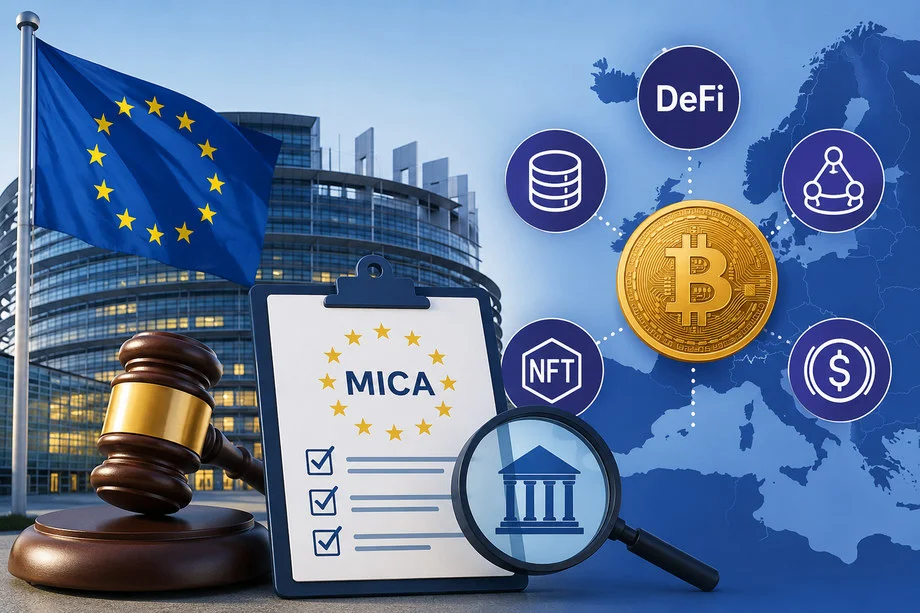
The European Parliament’s ECON committee has urged the European Commission to evaluate additional regulations covering decentralized finance, staking, lending, NFTs, and related activities as part of ongoing MiCA framework assessment. A vote is expected on July 7
ECON Committee Seeks Broader Regulatory Assessment
The Committee on Economic and Monetary Affairs (ECON) of the European Parliament has tabled an own-initiative resolution asking the European Commission to examine whether crypto lending and borrowing, staking, non-fungible tokens (NFTs),and decentralized finance (DeFi) require further regulatory measures beyond the current Markets in Crypto-Assets Regulation (MiCA).
Drafted by Belgian Member of the European Parliament Johan Van Overtveldt, the document was approved by the committee and is scheduled for a plenary vote in the European Parliament around July 7. If passed, it would represent the Parliament’s position on digital asset policy but would not change MiCA provisions or create new legal requirements.
- Evaluation of DeFi, staking, lending/borrowing, and NFTs
- Promotion of tokenization in financial services
- Support for consistent EU-wide MiCA implementation
Focus on Stablecoins and Tokenization
The resolution takes a constructive approach toward euro-denominated stablecoins issued under MiCA. It positions them as potential contributors to the EU payments sector, capable of working alongside tokenized commercial bank deposits and wholesale central bank digital currency arrangements. Lawmakers see value in faster, lower-cost cross-border transactions and greater competitiveness for EU financial markets.
This stance aligns with broader discussions on digital money coexistence. The committee has also supported developments around a digital euro, indicating openness to both public and private solutions operating in parallel.
Context of MiCA Implementation
MiCA’s transitional period ends on July 1. After this date, crypto-asset service providers generally need authorization to operate across the EU. The ECON resolution adds to ongoing Commission work, including a May public consultation on potential MiCA expansions to cover DeFi, staking, lending, NFTs, and tokenized assets.
Earlier drafts of the report concentrated more on stablecoin classifications and legal certainty for multi-issued tokens. Negotiations within ECON broadened the scope to address emerging activity types.
Implications for Market Participants
The resolution serves as a policy signal rather than immediate law. It directs attention toward how the Commission might define regulatory boundaries for activities that involve custody, asset pooling, market-making, and governance in decentralized settings. Consistent rules across the EU are presented as essential to avoid market fragmentation.
Van Overtveldt’s role is notable given his earlier positions during the 2023 banking events involving institutions like Silicon Valley Bank, where stablecoin reserve arrangements drew scrutiny. The current report marks a shift toward evaluating practical infrastructure uses within regulated frameworks.
- Own-initiative resolution by ECON sets Parliament position without direct MiCA changes
- July 7 plenary vote expected
- Assessment requested for DeFi, staking, NFTs, lending activities
- Support expressed for euro stablecoins and tokenization efforts
Disclaimer
This article was generated by AI using information from multiple industry sources. It has not been reviewed or verified by a human editor and may contain inaccuracies, omissions, or misinformation. Readers are encouraged to independently verify any information before making decisions based on its content.Tired of the noise?
Let the bots trade for you.
Trade 24/7, without emotion, with data-driven strategies.
Associated articles

Coinbase Establishes Luxembourg as Its EU-Wide MiCA Crypto Hub

India's RBI Pushes to Keep Banks Away from Crypto

EU Prepares MiCA Changes to Handle Non-EU Stablecoin Issuers

EU Issues 230 MiCA Licenses as July Deadline Approaches with Germany Leading

ECB and EU Central Banks Urge Removal of MiCA Bank Deposit Rules for Stablecoins
Latest articles

SpaceX and Tesla Set Up Committees to Explore Merger That Would Combine Holdings of Over 30,000 Bitcoins

UK Banks Face Thousands of Complaints Over Crypto Transfer Restrictions
Ripple Backs SEC Proposed Crypto Asset Rules After $150 Million Legal Battle

Blockchain.com Introduces Options Trading on Seven Major Crypto Assets