Newsroom
Datavault AI Stock Plunges Nearly 50% After Bitcoin Access Failure and Accounting Restatement
28 October, 2026 / News / AI / Tags: datavault, scilex, biconomy, audio, bitcoin

Nasdaq-listed firm discloses inability to withdraw bitcoin from Biconomy since June and warns prior financial statements are unreliable
Shares of Datavault AI Inc. fell nearly 50% on Tuesday after the company filed a regulatory disclosure stating it has been unable to withdraw bitcoin held at the Biconomy exchange since June and will restate more than a year of financial results. The stock closed at $0.067, down 49.55% from the prior close of $0.1328, on volume of roughly 244 million shares.
Details of the Scilex Transaction
The issue originates from a September 2025 securities purchase agreement with Scilex Holding Company. Under the deal, Scilex agreed to acquire 15 million shares of Datavault AI common stock plus a pre-funded warrant covering more than 263.9 million shares for $150 million, payable in bitcoin. The transaction valued the payment at approximately 1,328.43 bitcoin based on a spot rate of $112,915.52 per bitcoin.
Scilex credited 1,309.04 bitcoin to a Datavault digital wallet maintained by Biconomy through off-chain transfers. Between September 2025 and January 2026, Datavault sold 491.4 of those bitcoin back to Scilex for about $40.5 million in cash. The remaining balance remained in the Biconomy wallet.
In June 2026, Datavault requested a withdrawal of the bitcoin to an external account. As of the Oct. 26 filing, the withdrawal had not been completed. The company provided no further details on the reason for the delay.
Accounting Reclassification and Restatement
Following a review, Datavault determined the bitcoin associated with the Scilex transaction did not meet the requirements for recognition as a company digital asset. Instead, the amounts should have been recorded as a subscription receivable arising from the equity issuance, presented as a reduction of stockholders’ equity.
The company’s audit committee and management concluded on Oct. 20 that investors should no longer rely on previously issued financial statements covering the third quarter and first nine months of 2025, full-year 2025, the first quarter of 2026, and the second quarter and first half of 2026.
Datavault stated it intends to restate the affected statements but has not yet set a filing date. The identification and evaluation of the errors remain preliminary and may change.
Going-Concern Implications
Management is reassessing its going-concern analysis. The company had previously treated the bitcoin balances as a source of liquidity available to support operations. With the bitcoin no longer presented as an asset and collection from Scilex remaining uncertain, that assumption must be revisited. The effect of the restatement on the going-concern evaluation has not yet been determined.
Biconomy was also involved earlier in the funding chain. Scilex’s financial reports indicate it sold shares in a subsidiary to Biconomy for bitcoin and then used $150 million of that bitcoin to purchase the Datavault securities.
Additional Patent Disclosure
In the same period, Datavault reported progress on its WiSA wireless-audio intellectual property portfolio. The company listed three issued U.S. patents and 10 applications that received Notices of Allowance. The patents address audio-source localization, concealment of discontinuities in audio blocks, and multi-speaker speech processing.
The portfolio covers wireless-audio transmission and synchronization, speaker identification and localization, error concealment, interoperability, and device pairing. Potential applications include televisions, soundbars, home theater systems, wireless speakers, smart-home devices, gaming, and professional audio. No new licensing agreements or associated revenue were announced.
The combined disclosures on the inaccessible bitcoin position and the required accounting restatements drove the sharp decline in Datavault AI shares.


Disclaimer
This article was generated by AI using information from multiple industry sources. It has not been reviewed or verified by a human editor and may contain inaccuracies, omissions, or misinformation. Readers are encouraged to independently verify any information before making decisions based on its content.Tired of the noise?
Let the bots trade for you.
Trade 24/7, without emotion, with data-driven strategies.
Associated articles

Trump Accounts Disclose July Strategy Stock Purchases Ahead of Sharp Rally

Ionic Digital Shares Climb 26% in Nasdaq Direct Listing Debut

Strategy Sells 1,638 Bitcoin for $105 Million, Begins Tracking 200-Week Average

Berkshire Hathaway Lifts Alphabet Stake to Nearly $38 Billion, Ends Selling Streak
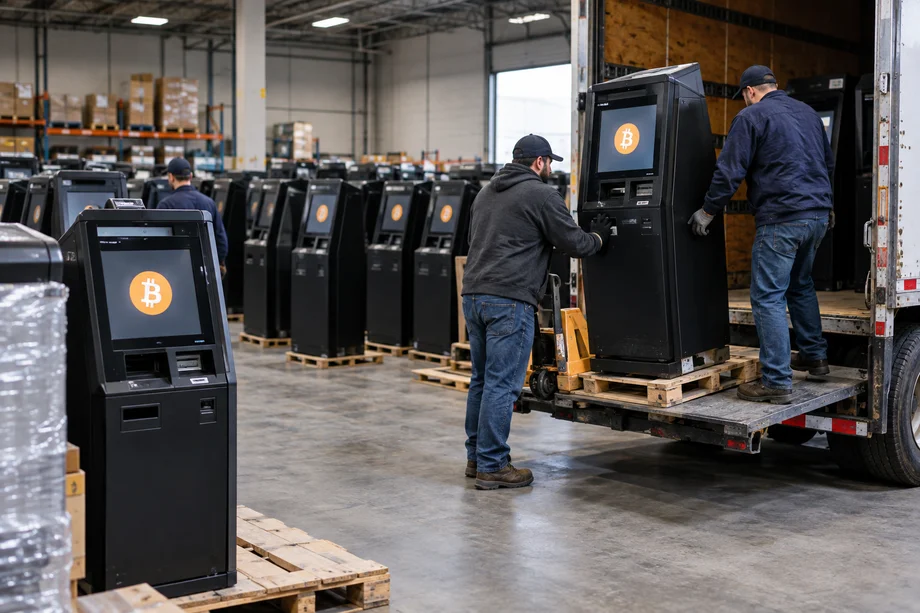
Bitcoin Bancorp Buys 2,547 Crypto ATMs From Bankrupt Bitcoin Depot for $620,750
Latest articles

Polymarket Probes Dozens of Midterm Election Bets, Refers Cases to CFTC

Payward Prepares CFTC-Regulated Perpetual Futures on Hyperliquid for US Clients

YieldMax Announces Weekly ETF Distributions for Oct. 28 Ex-Dividend Date

Bithumb Probes Employee System Breach Amid Rising Cyberattacks on South Korean Finance Firms