Newsroom
Compound Token Holders Vote on Proposal 612 to Extend Treasury Delays and Add Cancellation Powers
6 October, 2026 / News / AI / Tags: treasury, timelock, proposal, governance, compound

COMP holders decide on longer withdrawal cooldowns and governor authority to stop treasury actions after recent reserve moves and governance disputes
Compound token holders are voting on Proposal 612, a measure that would lengthen delays on treasury withdrawals and grant the protocol’s Governor Timelock the ability to cancel treasury transactions before they take effect. The vote opened on Sunday and is scheduled to close on Wednesday, October 7.
Delegate Ugur Mersin submitted the proposal on October 2. It raises the Treasury Escrow withdrawal cooldown and the Treasury Timelock’s minimum delay from two days to ten days. It also sets the Escrow expiration period at 17 days, creating a seven-day window for withdrawals once the cooldown ends. Two of the five actions in the proposal assign the EXECUTOR_ROLE and CANCELLER_ROLE to the Governor Timelock with respect to the Treasury Timelock. This would allow governance to block treasury operations in advance rather than respond only after they occur.
Current Voting Standings
At the latest count, approximately 1.75 million votes supported the proposal while 921,000 opposed it. Both figures surpass the 400,000-vote quorum required for a decision.
Recent Treasury Actions That Prompted the Measure
The proposal cites transactions carried out by Compound’s Treasury Management Committee on September 29. The committee moved roughly $3 million in stablecoins to a separate Safe. Of that amount, $2 million in USDC was deployed into a single-sided Uniswap V3 COMP position. Supporters of Proposal 612 argue the episode shows the need for an enforceable governance pause instead of relying solely on voluntary restraint.
An earlier dispute also forms part of the background. A community member alleged that the Compound Foundation converted 8.42 million DAI held in DAO reserves into 344,780 COMP. The claim stated that the resulting voting power was used to affect treasury decisions and a $52 million V4 development program. According to the allegation, the COMP was returned to its Safe 58 minutes before voting closed on Proposals 580 and 582. Proposal 536 had previously placed the reserve under Foundation management for protocol operations.
Broader Questions for DeFi Governance
Compound has already approved a $52 million development budget as it seeks greater participation from institutional markets. Stronger treasury controls may increase confidence among users and larger participants. At the same time, explicit cancellation and execution powers raise questions about the distribution of decision-making authority within the protocol.
A 2025 ACM study found governance problems common across DeFi projects. Research from Galaxy has pointed to losses and forced liquidations linked to governance failures. Regulatory frameworks also examine these issues. Summaries of the FATF approach note that authorities assess whether any party exercises control or sufficient influence, including through governance-token concentration and treasury management.
Market Context for Lending Protocols
The vote takes place against a contraction in DeFi lending. Galaxy data showed lending-app loans declined 27.61 percent to $20.43 billion in the second quarter of 2026. Overall crypto-collateralized lending fell 16.78 percent to $56.16 billion in the same period.
Proposal 612 therefore addresses both immediate operational safeguards and longer-running debates over how DeFi protocols balance enforceable controls with decentralized decision-making.

Disclaimer
This article was generated by AI using information from multiple industry sources. It has not been reviewed or verified by a human editor and may contain inaccuracies, omissions, or misinformation. Readers are encouraged to independently verify any information before making decisions based on its content.Tired of the noise?
Let the bots trade for you.
Trade 24/7, without emotion, with data-driven strategies.
Associated articles
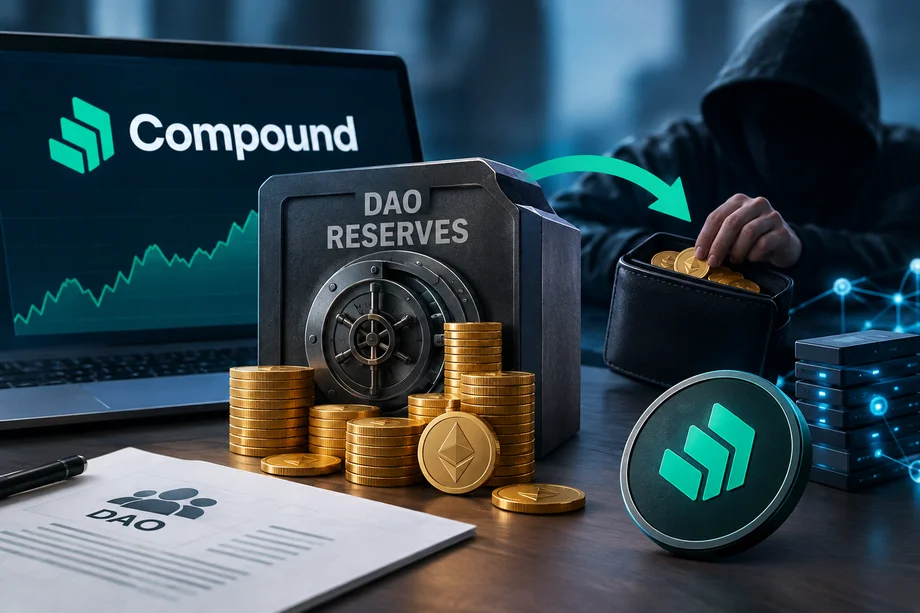
Community Accuses Compound Foundation of Misusing DAO Reserves to Secure Governance Control

Optimism Governance Approves Shift of 546.9 Million OP to Strategic Ecosystem Fund
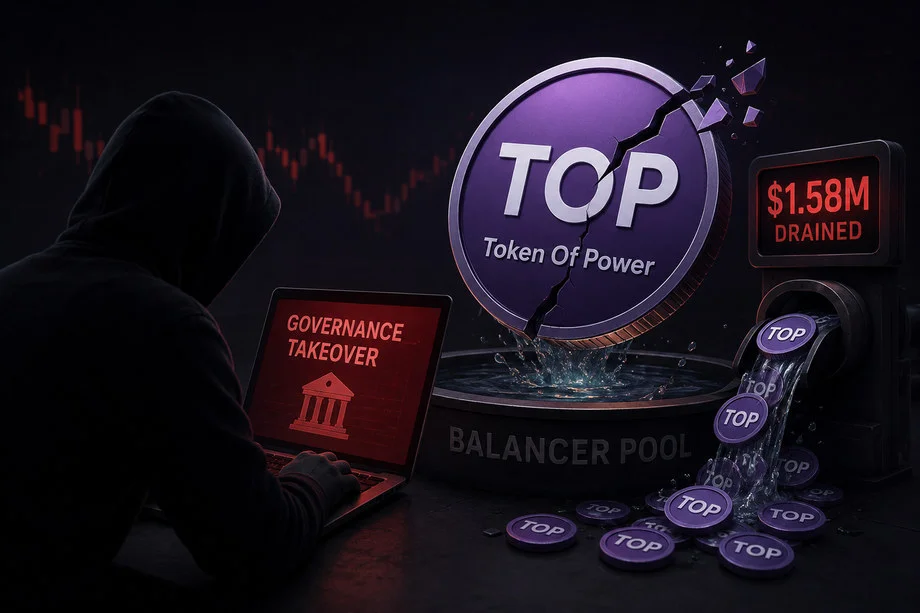
Governance Attack Drains $1.58 Million from Token of Power Protocol

Orbs Opens Community Vote on OIP-9 to Form DAO Governance Framework

Compound Approves $52 Million Plan and New Leadership for Institutional Shift
Latest articles

BloomTrading Pledges Refunds After Nearly $1 Million in Solana Wallet Drains

Jio Platforms Finalizes IPO Allotment Ahead of October 28 Market Debut

Monero Developer Seeks 45 XMR for Privacy and Wallet Upgrades

Musk Warns Over 200 AI Neoclouds Face Failure and Consolidation as Financing Tightens