Newsroom
Collector Crypt Logs Over 100,000 Pack Openings and $22 Million Revenue After Pump.fun Integration
22 October, 2026 / News / AI / Tags: collector, pack, pump, openings, cards
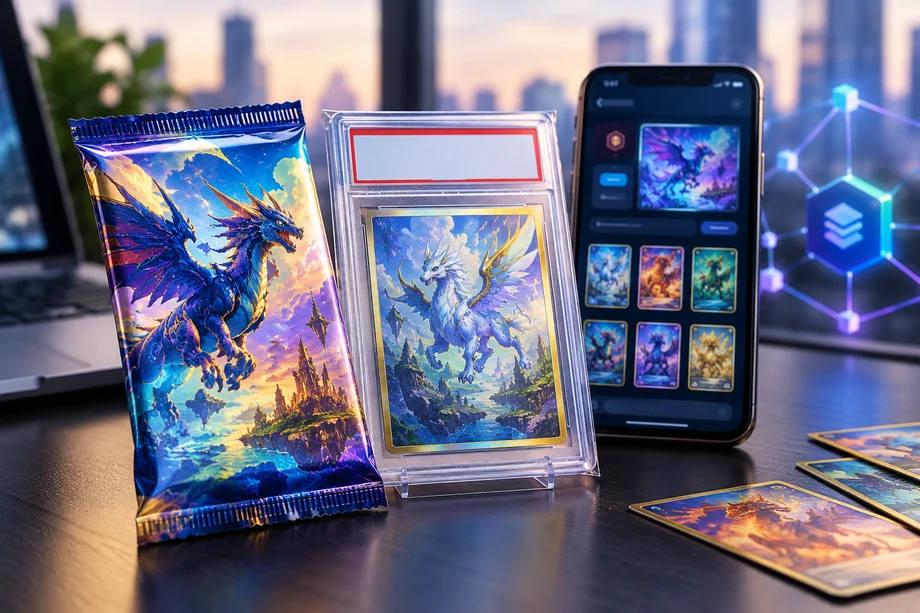
Solana collectibles platform reports sharp rise in activity following partnership, with prior 24-hour volume hitting $24.3 million and 123,425 openings
Collector Crypt, a Solana-based platform for tokenized trading cards, has seen a surge in usage after integrating its randomized pack-opening feature and marketplace with Pump.fun. Moonrock Capital founder Simon Dedic reported that the platform recorded 106,023 pack openings and more than $22 million in gross revenue during a recent day of activity.
Dedic described the opening total as twice the platform’s previous record and attributed the increase to broader distribution through Pump.fun. The exact measurement window for these figures was not specified. Collector Crypt had earlier logged 123,425 pack openings and $24.3 million in transaction volume over a defined 24-hour period, though the metrics differ and cannot be compared directly.
Pump.fun Partnership Drives Volume
Pump.fun added Collector Crypt’s pack feature and trading-card marketplace to its application on October 19. On the first day of the integration, users from Pump.fun generated about 20 percent of Collector Crypt’s overall pack-opening volume. The partnership allows buyers to purchase packs containing graded, tokenized cards from categories that include Pokémon, One Piece and sports titles, then trade them on the marketplace.
Dedic noted that 49 partner applications now use Collector Crypt’s application programming interface. Charts accompanying his comments showed partner spending reaching roughly $7.5 million on a recent day across services that include Pump.fun, Jupiter, Magic Eden, Solflare and others. Daily active addresses climbed above 6,200, compared with an earlier average near 1,000 that had held for months.
How Tokenized Packs and Redemption Work
Each pack opening delivers a nonfungible token that represents a graded physical card stored in a vault. A standard pack is priced at $50, with a random selection determining the NFT received. Eligible tokens may be sold back for USD Coin within 72 hours under the platform’s buyback rules. Holders who want the physical card must burn the corresponding NFT and pay shipping costs. Cards must be graded before they can be deposited into the vault system.
Pack prices across categories range from lower-cost options starting near $25 to higher-tier offerings reaching $5,000. The platform’s documentation allows partner applications to create their own pack experiences, deliver the associated NFTs and handle eligible buybacks. Gross revenue figures reported by Dedic represent totals before expenses and do not indicate net profit after buybacks or other costs.
Holder Growth and Platform Metrics
Data tracked by Blockworks showed the number of wallets holding at least one collectible surpassing 20,000, excluding certain Gachapon addresses. A separate measure of wallets holding more than one collectible remained below 10,000. Both figures have risen through 2026, with faster growth later in the year. Active-address charts group users by lifetime spending levels ranging from $50 or less to more than $1 million.
Collector Crypt’s earlier cumulative Pokémon pack sales exceeded $70 million by September 2025, according to comments from Raydium at that time. The platform’s native token has remained below its September 2025 all-time high even as operational activity increased.
Physical cards stay vaulted until a holder initiates redemption. Shipping payments can be made by credit card, cryptocurrency or USD Coin, and items stored in partner vaults may require additional time for delivery. The system excludes sealed submissions for deposit and requires inspection before an NFT is issued.
Disclaimer
This article was generated by AI using information from multiple industry sources. It has not been reviewed or verified by a human editor and may contain inaccuracies, omissions, or misinformation. Readers are encouraged to independently verify any information before making decisions based on its content.Tired of the noise?
Let the bots trade for you.
Trade 24/7, without emotion, with data-driven strategies.
Associated articles
Coinbase Teases Phone-Based Pokémon Card Packs Backed by Physical Collectibles
Pump.fun Transfers Another $5.83 Million in SOL to Kraken as Cumulative Sales Hit $848 Million

Curve Founder Labels Pump.fun a Casino of Scams, Criticizes Phantom Wallet

Hyperliquid HYPE Defies Dilution Fears With $1.16B Buybacks and ETF Surge
Ether.fi Expands App With Tokenized Stocks, Portfolio Loans and Broader Fiat Access
Latest articles
Bybit Eyes U.S. Broker Deals and European App Launch Amid Regulatory Wait

Cardano Foundation Calls on EU to Apply Existing Rules to DeFi and Staking
MEXC Ends Services for Users in Russia and Belarus Amid Compliance Push

Critical PHP Flaws Enable Remote Server Takeovers, Prompting Emergency Patches and Site Shutdowns