Newsroom
Circle Sets Arc Mainnet Launch for September 16 With Institutional Validators
15 September, 2026 / News / AI / Tags: circle, arc, dollars, validators, robinhood
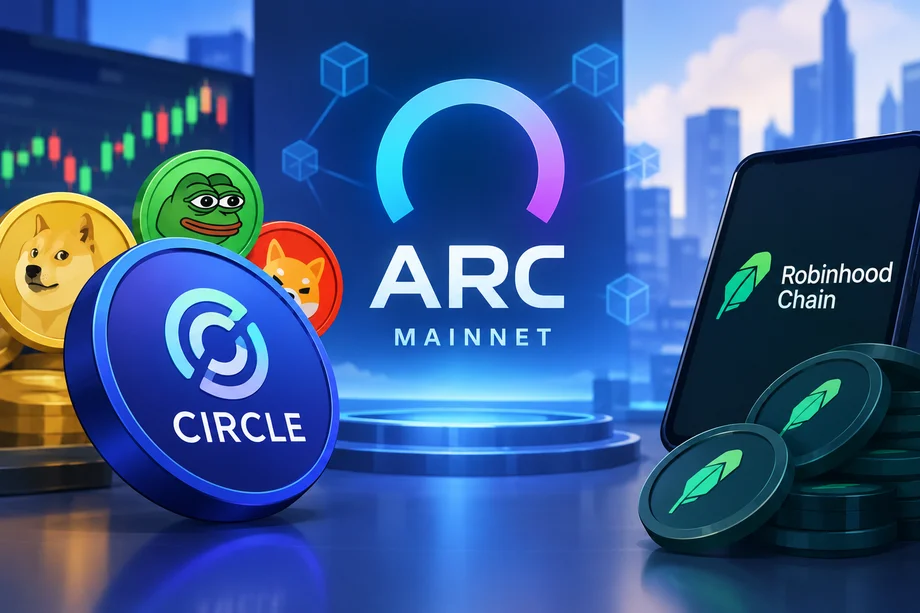
Circle confirms the public debut of its Arc Layer-1 blockchain on September 16, backed by major finance firms and designed for stablecoin payments, as traders watch for potential meme activity similar to recent chain launches
Circle has confirmed that its Arc mainnet will open to the public on September 16, 2026. The Layer-1 network, first announced in August 2025, is purpose-built for stablecoin transfers, real-time settlement, foreign exchange, and tokenized assets. It follows a public testnet that began in October 2025 and processed more than 244 million transactions across nearly three million wallets, with participation from over 100 ecosystem and institutional builders.
Institutional Validators and Day-One Support
Eleven founding validators will secure the chain at launch. These institutions span asset management, banking, payments, and market infrastructure. Circle positions the model as one secured by the firms building on the network rather than external miners alone.
| Validator | Sector |
|---|---|
| BlackRock | Asset management |
| DTCC | Market infrastructure |
| Galaxy | Digital assets |
| Global Payments | Money transfer |
| ICE | Exchanges |
| Mastercard | Card networks |
| MoneyGram | Remittances |
| SBI Group | Banking |
| Standard Chartered | Banking |
| Sumitomo Corporation | Trading |
| Visa | Card networks |
Wallet providers including OKX Wallet and Binance Wallet have confirmed day-one support, allowing users to discover assets, trade, and transfer funds on Arc directly within their applications. Additional partners span DeFi protocols such as Aave, Uniswap, Morpho, and FalconX; money-movement applications including Raincards, Thunes, and Wirex; and infrastructure providers such as Chainlink, Fireblocks, Kraken, Ledger, MetaMask, and Upbit.
Technical Design Focused on Payments
Arc uses USDC as its gas token, offering predictable fees denominated in stablecoins. The network targets sub-second finality, with transaction completion around 350 milliseconds, and includes a built-in foreign exchange engine. Circle plans an initial product suite featuring a composable application framework, AI-powered developer tools, capabilities for managing tokenized real-world assets, and an Agent Stack intended for automated financial workflows.
The company raised 222 million dollars in a token presale at a 3 billion dollar valuation. USDC itself maintains a market capitalization of approximately 74.2 billion dollars. Arc maintains EVM compatibility, which could support existing DeFi tooling, including potential activity on Uniswap v4 and Aerodrome.
Meme Trading Interest and Robinhood Chain Parallel
Despite the institutional focus, meme coin traders have begun positioning ahead of the launch. Some market participants compare the setup to Robinhood Chain, an Arbitrum-based Layer-2 that went live on July 1 and was initially positioned around tokenized real-world assets. Speculative activity quickly dominated that network. Decentralized exchange volume reached 563.9 million dollars on July 8, with more than 16,000 tokens created in a single day. Daily volume later climbed above 1 billion dollars and peaked at an all-time high of 3.7 billion dollars. Daily revenue on Robinhood Chain approached 4 million dollars at its height before declining to about 1.06 million dollars by mid-September.
Traders have mapped potential Arc launchpads and pre-mainnet tokens in recent weeks. One observer noted the community discussion:
Arc differs in key respects. It has not yet launched a native token available for speculation, buybacks, or burns. Its closed transaction queue may constrain certain high-frequency trading strategies that rely on rapid ordering. Circle retains significant control over the protocol. These structural elements could limit the intensity or duration of any retail-driven activity relative to chains that launched with more open speculative incentives.
Launch Context and Near-Term Outlook
The mainnet opening moves Arc from private testing into public operation. Further details on developer tools, additional partners, and ecosystem applications are expected in the weeks following the debut. Early adoption metrics, both institutional and retail, will become clearer once the network settles into regular use.
Everyday users will primarily interact with Arc through supported wallets and exchanges rather than through new onboarding steps. The combination of traditional finance validators and open developer access represents a distinct approach for a new Layer-1 focused on onchain finance and settlement.

Disclaimer
This article was generated by AI using information from multiple industry sources. It has not been reviewed or verified by a human editor and may contain inaccuracies, omissions, or misinformation. Readers are encouraged to independently verify any information before making decisions based on its content.Tired of the noise?
Let the bots trade for you.
Trade 24/7, without emotion, with data-driven strategies.
Associated articles
Circle Activates Arc Mainnet With USDC Gas and Major Financial Validators
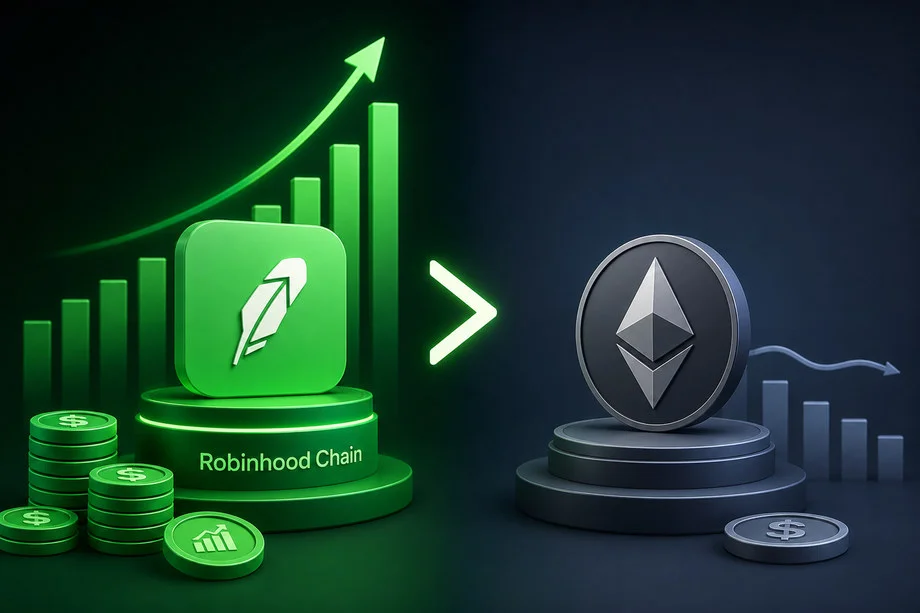
Robinhood Chain Surpasses Ethereum in Daily DEX Volume
Robinhood Chain Records Strong First Week With Over $70M ETH Bridged

Robinhood Chain Tokenized Stocks Surge Fivefold to $70 Million as Trading Volumes Expand
Circle Deploys Native USDC and Cross-Chain Protocol on OKX X Layer
Latest articles

Mysterious Poems Repeatedly Appear on Bitcoin Blockchain Over 12 Days

Arthur Hayes Closes Maelstrom Positions With $22.28 Million Token Sales

Global X Canada Sets Monthly Distributions Across Four ETFs

IRS Plans Lower Penalties and Faster Resolutions for Voluntary Tax Disclosures, Including Crypto