Newsroom
Circle Foundation Grants Back UN Stablecoin Trials for Faster Aid Delivery
25 September, 2026 / News / AI / Tags: wfp, undp, foundation, circle, grants
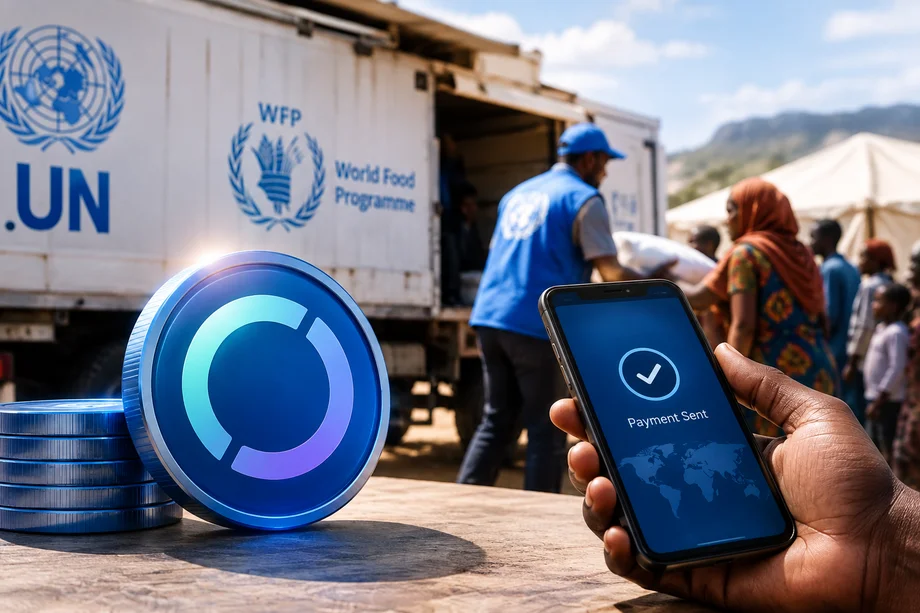
Two United Nations agencies will test regulated payment stablecoins to cut costs and speed fund transfers in development and humanitarian work
Circle Foundation announced on September 25, 2026, two separate grants supporting the United Nations Development Programme and the World Food Programme in trials of digital payments, including regulated payment stablecoins. The initiatives aim to determine whether these tools can deliver funds to recipients more quickly and at lower cost than conventional banking channels.
The grants target different stages of adoption. UNDP will expand methods already tested in prior projects, while WFP will first build the operational systems required before field testing begins.
UNDP Establishes Digital Asset Innovation Pool
Under its grant, UNDP will create and operate a Digital Asset Innovation Pool. The mechanism is designed to help country offices evaluate regulated payment stablecoins as an option alongside established banking channels. It will supply guidance on local regulations, day-to-day operations and safeguards for recipients.
The pool will also equip UNDP with tools to measure payment speed, costs, reach and protective measures. Officials noted that ordinary payment systems can produce high costs, delays or access barriers. The new option is intended to address those gaps without replacing existing banking arrangements.
Earlier pilots provide a foundation for the expansion. In Aleppo, Syria, a cash-for-work project using digital payments reduced distribution costs from 10 percent to 2 percent. Additional tests took place in Haiti, where disbursements continued during limited connectivity; in Guatemala, linking remittances to community investment; and in The Gambia, connecting mobile wallets to cash-agent networks.
Pasicko’s team previously led UNDP’s Sustainable Development Goals Blockchain Accelerator, through which the earlier payment solutions were developed and tested.
WFP Builds Infrastructure for Multi-Year Corridor Tests
The grant supporting WFP, awarded through World Food Program USA, will fund foundational work rather than immediate large-scale disbursements. WFP and its Innovation Accelerator will develop governance and risk frameworks, treasury and reconciliation systems, and compliance tools capable of operating across multiple country programs.
Reconciliation is a key focus, allowing the agency to match funds sent through a payment system with internal records and amounts received locally. WFP will also establish connections with local fintech firms and mobile-money providers so digital transfers can reach recipients through services already available in target markets.
Over the next three years, WFP plans to test two to three country payment corridors that link its systems with local financial providers. The trials are expected to generate data on efficiency, transparency and resilience, along with independent analysis of costs and speed in humanitarian settings.
WFP has not committed to full-scale deployment. The organization will use the grant period to assemble the evidence, partnerships and operational capacity needed to assess potential broader use.
Funding Structure and Broader Context
Circle Foundation’s resources derive from an equity commitment by Circle Internet Group, the U.S.-listed issuer of payment stablecoins trading under the ticker CRCL. The company has pledged approximately 1 percent of its equity to the foundation. Regulatory filings indicate the board has reserved up to 2,682,392 Class A shares for contributions over a ten-year period. The foundation operates as a donor-advised fund managed by Fidelity Charitable.
The new grants follow Circle Foundation’s first international award, announced in January, which supported the Digital Hub of Treasury Solutions. That shared United Nations platform, launched by UNHCR in 2021 to modernize financial operations, includes 15 participating organizations, among them UNDP and WFP. The earlier funding addressed cross-border transfers, local-currency conversion and interconnections between financial systems.
Exact grant amounts were not disclosed. Specific stablecoins to be used and the countries selected for WFP’s corridors have also not been named. Those details are expected to emerge as the projects advance.

Disclaimer
This article was generated by AI using information from multiple industry sources. It has not been reviewed or verified by a human editor and may contain inaccuracies, omissions, or misinformation. Readers are encouraged to independently verify any information before making decisions based on its content.Tired of the noise?
Let the bots trade for you.
Trade 24/7, without emotion, with data-driven strategies.
Associated articles
UNDP Scales Stellar Blockchain Payments After Successful Aid Pilots
Ripple Invests in Flutterwave Series E at $3.2 Billion Valuation

Lloyds and Visa Settle $750,000 Using USDC in Cross-Border Pilot

Kakao Pay and KakaoBank Partner With Fireblocks on Stablecoin Infrastructure Tests

Bank of Italy Study Finds No Consistent Cost Edge for Stablecoin Remittances
Latest articles
Babylon Labs Advances Proposal for Native Bitcoin Lending on Aave V4

TSMC Posts Record Q3 Profit Surge on AI Chip Demand, Lifts Full-Year Outlook

ASIC Opens Consultation on Capital and Custody Rules for Digital Asset Platforms

GTA 6 Leaker Cyberleek Drops Full Build Plan After Memecoin Collapse, Activates Dead Man’s Switch Threat