Newsroom
Bitcoin Policy Institute Becomes Finney Foundation, Broadens Scope to Open Technology
18 November, 2026 / News / AI / Tags: finney, fellows, open, foundation, policy

The Washington think tank expands beyond Bitcoin to open-source AI, digital cash and encrypted messaging while continuing its original policy work under a new parent organization named for early cryptographer Hal Finney
The Bitcoin Policy Institute announced on November 17 that it now operates as the Finney Foundation for Open Technology. The nonprofit think tank, based in Washington, D.C., will keep its Bitcoin research and advocacy intact while widening its agenda to include open-source artificial intelligence, digital cash and encrypted messaging.
The foundation is named for Hal Finney, the American cryptographer and software developer who helped create the PGP email encryption program, operated one of the first anonymous remailers and received the first Bitcoin transaction from Satoshi Nakamoto in January 2009. Finney, who lived from 1956 to 2014, wrote in 1992 that the computer “can be used as a tool to liberate and protect people, rather than to control them.”
Mission and Declaration
Alongside the name change, the organization published an Open Technology Declaration titled “For Us, Not Over Us.” The document frames the foundation’s work as research, policy proposals and educational programs designed to keep powerful new tools under individual control rather than centralized authority. It argues that people should be able to build, modify and use open systems without waiting for permission from governments or corporations.
David Zell, president of the Finney Foundation, described the shift as a natural extension of the institute’s earlier efforts.
Andrew Bailey, the foundation’s head of strategy, said the underlying principle is the same across technologies. Running a Bitcoin node or sending value without intermediaries, he noted, rests on the same desire for machines that obey their users rather than external gatekeepers.
Bailey added that the organization will seek legal protections, including under the First Amendment, for tools people can run and publish themselves. He cited competition with China, cybersecurity risks and the ability of open-weight models to surface and repair code vulnerabilities as reasons open systems matter.
Continuity of Bitcoin Work
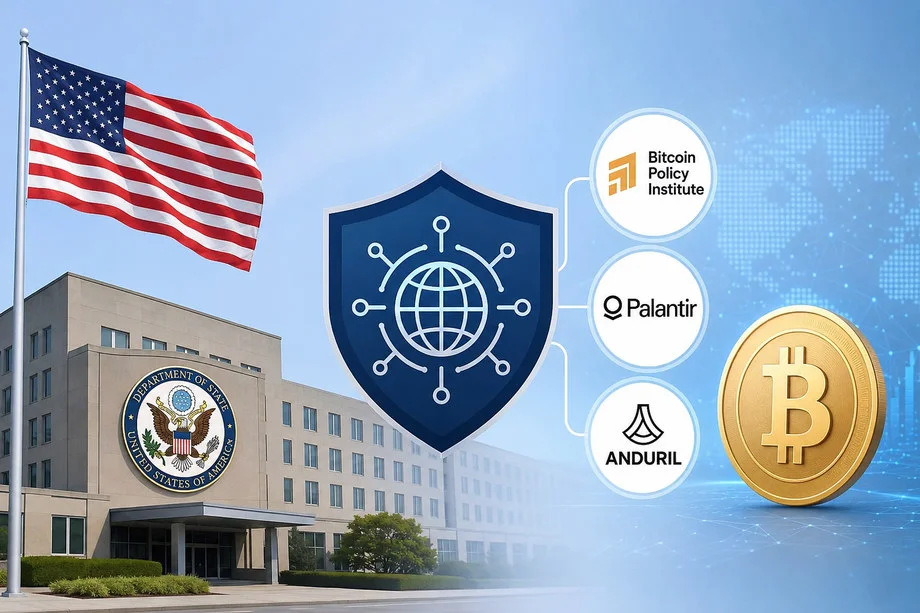
The Bitcoin Policy Institute, founded in 2022, retains its own roster of fellows and continues programs already under way. These include a congressional fellowship that places specialists in offices of both parties, advocacy for de minimis tax relief that would cover Bitcoin, and participation as a founding partner in the State Department’s Freedom Tech Excellence Program. Conner Brown, named executive director in August, remains in that role on the foundation staff.
Resources for Bitcoin-related work in the coming year have already been allocated. The foundation plans to keep briefing congressional staff and hosting its annual policy gathering, previously known as the Bitcoin Policy Summit and rebranded this year as Freedom Tech DC. That September event already featured sessions on open-source and open-weight AI, data centers, energy infrastructure, Bitcoin and dollar-backed stablecoins.
At the gathering, Block co-founder Jack Dorsey pointed to open intelligence as a central next step for freedom-oriented technology, arguing that keeping it out of the exclusive control of any single government or company would produce better outcomes.
New Fellows and Broader Agenda
The Finney Foundation will name its first class of Finney Fellows on November 18 at 10 a.m. ET. The researchers’ expertise covers machine intelligence, free speech, national security, biotechnology and space. Fellows are expected to produce both detailed reports and shorter public-facing materials that present an optimistic case for technologies that expand individual agency.
The organization positions itself as a nonpartisan 501(c)(3) think tank focused on expanding the range of policy options available to lawmakers as computing power and artificial intelligence advance rapidly. Its stated goal is to equip decision-makers with ideas that treat open systems—open money, open intelligence and open communication—as sources of resilience and American strength rather than risks to be contained.
By placing Bitcoin work inside a larger open-technology framework, the foundation aims to connect debates over digital assets with parallel questions about who controls the software, hardware and data that shape daily life.

Disclaimer
This article was generated by AI using information from multiple industry sources. It has not been reviewed or verified by a human editor and may contain inaccuracies, omissions, or misinformation. Readers are encouraged to independently verify any information before making decisions based on its content.Tired of the noise?
Let the bots trade for you.
Trade 24/7, without emotion, with data-driven strategies.
Associated articles


Latest articles

Binance Wallet Closes $500 Million Anthropic Tokenized Stock Campaign After Cap Hit

XRP Ledger Secures Independent Verification of Architecture and Resiliency Under Global Framework

ZachXBT Claims Indian Authorities Wrongly Froze $3M Gate Account in Scam Probe

Vitalik Buterin Urges Crypto to Build Long-Term Stability Like Housing