Newsroom
Singapore, Malaysia and Thailand Central Banks Expand BLOOM for Cross-Border Digital Money Settlement
23 October, 2026 / News / AI / Tags: bloom, bank, singapore, thailand, negara
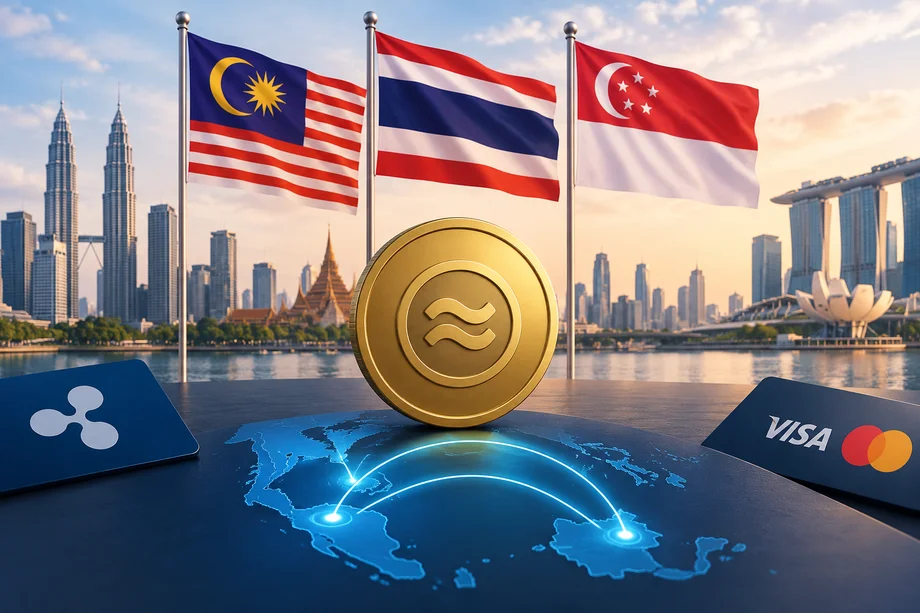
Bank Negara Malaysia and the Bank of Thailand join Singapore’s BLOOM initiative as policymaker members to develop common frameworks for regulated stablecoins and tokenized deposits in regional payments
The Monetary Authority of Singapore announced on 23 October 2026 that Bank Negara Malaysia and the Bank of Thailand have joined the BLOOM initiative as policymaker members. The three central banks will work with industry participants to create shared approaches for accepting, exchanging and settling different forms of digital money across institutions, networks and borders.
BLOOM, which stands for Borderless, Liquid, Open, Online, Multi-currency, is a public-private collaboration launched by the Monetary Authority of Singapore in October 2025. It builds on earlier work under Project Orchid, which began in 2021 to examine uses for a digital Singapore dollar. The initiative brings together policymakers, banks, payment networks and technology firms to advance digital money applications in cross-border payments, corporate treasury and trade finance.
Focus on Acceptance, Interoperability and Controls
Participants will concentrate on three main areas. The first covers how financial institutions accept varied forms of digital money for cross-border transactions, how counterparties establish contracts, and how final settlement occurs across different markets. The second examines technical and operational methods that allow separate digital money systems to connect and operate across networks and jurisdictions. The third addresses programmable safeguards, including identity verification, sanctions screening and transaction controls that institutions may require for international transfers.
The goal is to develop implementation frameworks and align commercial and operating arrangements so that banks and payment firms no longer need to negotiate separate setups with every counterparty or market. This is expected to lower costs and shorten the time required to bring services to market, while each central bank retains responsibility for its own regulatory decisions.
Expanded Industry Participation
Alongside the two new central bank members, BLOOM has added Airwallex, Mastercard, Maybank, Monee, Nium, Ripple, ShopeePay, Visa and the World Bank Group. Existing participants include Anchorage Digital, Ant International, Circle, Coinbase, DBS, J.P. Morgan, Kasikornbank, OCBC, Partior, Schroders, Standard Chartered, StraitsX, Stripe, Temasek, UOB and Xweave.
The World Bank Group joins as a multilateral development institution, contributing experience in payment system modernization, cross-border payments and financial inclusion, with attention to the needs of developing economies. Industry members are already exploring applications that involve tokenized bank deposits, regulated stablecoins and settlement across payment networks. Earlier pilots under the initiative have examined settlement of regulated U.S. dollar- and euro-backed stablecoins outside conventional banking hours, as well as trade finance uses linked to tokenized commercial transactions.
National Stablecoin Work Continues in Parallel
Bank Negara Malaysia has been testing ringgit-denominated stablecoins and tokenized deposits through its Digital Asset Innovation Hub. In February it announced three controlled initiatives focused on domestic and international wholesale payments, with further regulatory clarity expected by the end of 2026. These experiments are intended to inform policy on settlement of tokenized assets and possible links to wholesale central bank digital currency research.
The Bank of Thailand opened a public consultation on 20 October 2026 on regulatory principles for baht-backed stablecoin issuers and wallet providers. Proposed requirements cover reserve backing, redemption safeguards, transaction monitoring, financial stability and cybersecurity. Officials treat baht stablecoins as a potential complement to existing payment systems rather than a replacement.
Neither central bank has adopted Singapore’s stablecoin framework, and the expanded BLOOM arrangement does not create a shared regional license, common currency or operational settlement network covering all three countries. The work remains focused on practical frameworks that respect each jurisdiction’s supervisory requirements.
No launch date, transaction volume targets or timetable for adopting common rules has been announced. The three central banks and industry participants will continue developing the frameworks while each regulator retains authority over domestic decisions.
Disclaimer
This article was generated by AI using information from multiple industry sources. It has not been reviewed or verified by a human editor and may contain inaccuracies, omissions, or misinformation. Readers are encouraged to independently verify any information before making decisions based on its content.Tired of the noise?
Let the bots trade for you.
Trade 24/7, without emotion, with data-driven strategies.
Associated articles

Visa Partners with Nium for Seven-Day Stablecoin Settlement Pilot in Singapore

Bank of England Considers Volume Guardrails as Alternative to Stablecoin Holding Limits

Former Central Bankers Join Fnality to Guide Blockchain Payments Expansion

Oracle Connects Banks to SWIFT Blockchain Ledger for Tokenized Payments

Mastercard Completes $1.8 Billion BVNK Acquisition to Link Crypto and Traditional Payments
Latest articles

Heatbit Launches $899 Bitcoin-Mining Water Heater Element for Existing Tanks

Underdog Partners With Zerohash for Crypto and Stablecoin Account Funding

Chainlink Teams With LG CNS to Advance Korean Stablecoins and Tokenization

JPMorgan Expands Tokenized Money Market Funds to Solana Blockchain