Newsroom
Senators Warren and Wyden Probe Tether Loan Tied to Commerce Secretary Lutnick’s Family Trust
24 November, 2026 / News / AI / Tags: lutnick, tether, senators, children, wyden
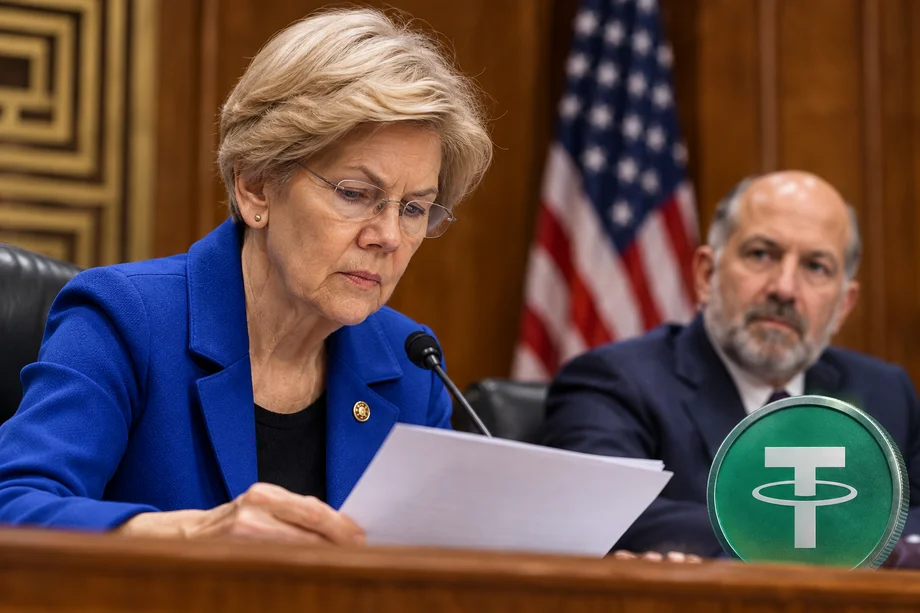
Democratic senators seek answers from Howard Lutnick and Tether CEO Paulo Ardoino over a reported loan linked to the transfer of Cantor Fitzgerald ownership to Lutnick’s children
Two leading Senate Democrats have formally questioned U.S. Commerce Secretary Howard Lutnick and Tether chief executive Paulo Ardoino about reports that the stablecoin issuer extended a loan to a trust benefiting Lutnick’s four children. The inquiry centers on whether the financing assisted the transfer of Lutnick’s multi-billion-dollar stake in Cantor Fitzgerald to his adult children as part of ethics requirements following his Cabinet appointment.
Details of the Reported Arrangement
According to the senators’ letters, reporting indicated that Lutnick transferred ownership of Cantor Fitzgerald to his children shortly after completing required divestitures. A credit document filed in New York on October 7, 2025, showed that Tether lent an undisclosed sum to an entity identified as Dynasty Trust A. The trust’s beneficiaries are described as Lutnick’s four children.
Senators Elizabeth Warren, ranking member of the Senate Banking Committee, and Ron Wyden, ranking member of the Finance Committee, stated that if the reports are accurate the arrangement would raise serious questions about the relationship between the Commerce Secretary and the foreign stablecoin company, as well as any potential influence on policy decisions.
The lawmakers asked whether the loan helped supply capital for the children’s acquisition of the Cantor Fitzgerald stake and whether Tether obtained any interest in assets held through the trust. They also inquired about any explicit or implicit agreement that Lutnick would use his position to benefit Tether in exchange for the financing.
Specific Questions Posed
In letters sent to both Lutnick and Ardoino, the senators requested responses by May 13. Among the eight questions directed to Lutnick were whether he knew Tether had provided the loan to Dynasty Trust A, what role if any he played in arranging or negotiating it, the size and terms of the loan, and a copy of the credit document. They further asked for information on any other sources of financing used for the divestiture.
The senators noted that Cantor Fitzgerald previously managed certain U.S. financial operations for Tether. Lutnick’s sons Brandon Lutnick, now chairman and chief executive, and Kyle Lutnick, executive vice chairman, currently lead the firm.
Policy Context and National Security Concerns
The inquiry occurs against the backdrop of the GENIUS Act, the first major U.S. legislation governing stablecoin issuers, which President Donald Trump signed into law in July 2025. Ardoino attended the White House signing ceremony in a prominent seat, and Lutnick was also present. Lutnick serves on the President’s Working Group on Digital Assets, which has shaped federal digital-asset policy.
Warren and Wyden cited longstanding concerns that Tether has been used in ways that raise money-laundering and sanctions-compliance risks. They referenced reports of a Department of Justice investigation into possible violations of sanctions and anti-money-laundering rules. The senators argued that any financial link between the company and a Cabinet official’s family would heighten those concerns.
Tether, headquartered in El Salvador, has expanded its U.S. presence, including the launch of a federally regulated stablecoin product and the appointment of a former White House crypto adviser to lead its American operations. Neither the Department of Commerce nor Tether immediately responded to requests for comment on the senators’ letters.
The probe adds to ongoing congressional scrutiny of stablecoin issuers and the intersections between private digital-asset firms and senior government officials responsible for related policy.
Disclaimer
This article was generated by AI using information from multiple industry sources. It has not been reviewed or verified by a human editor and may contain inaccuracies, omissions, or misinformation. Readers are encouraged to independently verify any information before making decisions based on its content.Tired of the noise?
Let the bots trade for you.
Trade 24/7, without emotion, with data-driven strategies.
Associated articles
Senate Democrat Demands Cantor Fitzgerald Records on Tether Partnership and Family Gains
US Senator Seeks Records on Tether Payments to Firm Tied to Former White House Crypto Adviser

Coinbase Challenges Senator Warren Over CLARITY Act National Security Concerns

Treasury Secretary Presses Senate for Immediate CLARITY Act Vote Ahead of August Recess

Goldman Sachs CEO Backs CLARITY Act Amid Banking Industry Split on Crypto Rules
Latest articles
Utah Drops Criminal Charges Against Kalshi After Platform Halts Services in State

Ledn Rolls Out US Custody Accounts for Bitcoin, Gold and Stablecoins

South Korea Proposes End to Nine-Year ICO Ban Under Strict Disclosure Rules

Deel Rolls Out Visa Card for Direct DLUSD Spending in 26 Markets