Newsroom
S&P Maintains Lowest Stability Score for Tether’s USDT Amid Rising Reserve Risks
19 November, 2026 / News / AI / Tags: tether, usdt, reserves, agency, segregation
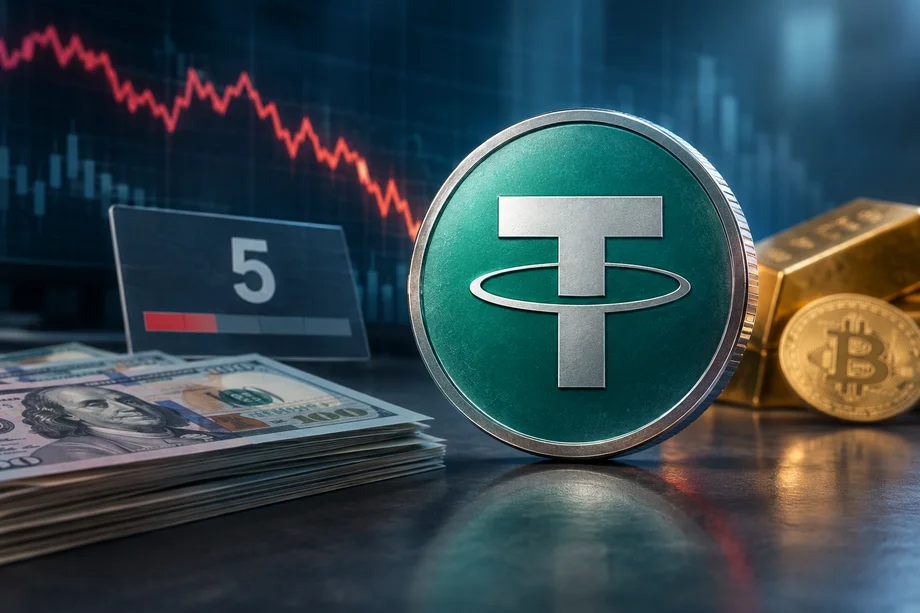
Agency keeps USDT at weak rating of 5 as higher-risk assets reach 28% of reserves, while Tether challenges the assessment framework
S&P Global Ratings has retained its lowest possible stability assessment for Tether’s USDT stablecoin, citing an increased share of higher-risk assets in the token’s reserves and ongoing concerns over transparency and regulatory safeguards. In a report published on November 18, 2026, the agency assigned USDT a score of 5, or weak, on its five-point scale measuring the ability to maintain a dollar peg. The rating matches the level set in November 2025.
The assessment focuses on structural factors rather than recent market performance. S&P noted that USDT has shown a solid record of price stability over the past 12 months, yet the agency identified persistent weaknesses that prevent any improvement in the score. The scale has no category below 5, so additional concerns did not result in a further downgrade.
Higher-Risk Assets Climb to 28 Percent of Reserves
As of September 30, 2026, assets classified by S&P as higher risk accounted for 28 percent of USDT in circulation, up from 24 percent a year earlier. These holdings include gold, Bitcoin, publicly traded equities, secured loans and corporate bonds. The agency warned that a significant decline in the value of these assets could leave USDT undercollateralized.
Tether’s own reserve report for the same date, attested by BDO, showed approximately $191.5 billion in total assets against $183.5 billion in liabilities. This produced an excess buffer of roughly $7.95 billion and a collateralization ratio of about 104.3 percent. Despite the surplus, S&P observed that the value of the higher-risk portion substantially exceeded the available excess reserves.
Detailed shifts within the portfolio included gold holdings rising from $12.9 billion in September 2025 to approximately $19 billion a year later. Bitcoin holdings declined from $9.9 billion to $8.4 billion over the same period. Tether also introduced about $4.2 billion in public equity investments. Cash-equivalent and short-term assets continued to form the majority of the reserves, though their relative share edged lower.
Regulatory Oversight and Asset Segregation Draw Scrutiny
S&P raised specific questions about the regulatory environment following Tether’s relocation to El Salvador in January 2025. The National Commission of Digital Assets of El Salvador oversees the company and requires that at least 70 percent of reserves consist of assets liquidable within 30 days. Tether has described this requirement as broad, noting that it permits the inclusion of gold, Bitcoin and loans.
The agency also pointed to the absence of a clear public requirement for the segregation of reserve assets from Tether’s other corporate activities. Unlike frameworks common in the United States and Europe, there is limited publicly available information on how the reserves would be insulated in the event of broader financial stress at the issuer. S&P stated that this lack of visibility reduces confidence in the protection of USDT holders under adverse conditions.
Transparency Gaps Persist Despite First Full Audit
In August 2026, KPMG issued an unqualified opinion on Tether’s 2025 financial statements, marking the company’s first full independent audit. Tether has said the audit supports its published figures and included physical verification of gold holdings. However, S&P noted that neither the audited statements nor the accompanying auditor’s report have been made public, limiting external verification of the underlying data.
Reserve attestations continue to appear on a quarterly basis, while many competing stablecoins publish monthly updates. The reports also omit the names of custodians and counterparties holding the assets. S&P indicated that disclosures on the composition and credit quality of certain credit-related holdings remain insufficient for a full independent assessment.
Tether rejected the findings, arguing that the low score stems from the methodology used by the ratings agency rather than any shortfall in its reserve structure. The company referenced historical failures of traditional rating approaches, drawing a parallel to events portrayed in the film The Big Short about the 2008 financial crisis. In earlier responses to similar assessments, Tether executives have characterized criticism from traditional finance institutions as a point of pride, pointing to the company’s operational track record.
Price Stability and Market Context
Despite the structural concerns, S&P acknowledged USDT’s consistent ability to trade near its $1 target over the past year. Direct redemptions are limited to verified customers with holdings of at least $100,000 and carry specific fees, but secondary-market liquidity on major exchanges has helped support the peg. As of late October 2026, the bulk of circulating USDT was distributed across Tron and Ethereum networks, with smaller amounts on other chains.
The stablecoin’s market capitalization stood near $184 billion at the end of September, reflecting growth from roughly $158 billion a year earlier. Tether’s excess reserve buffer also expanded during the third quarter, supported by operating profits generated largely from holdings of U.S. Treasury bills and related instruments.
S&P’s assessment remains an evaluation of resilience under stress rather than a formal credit rating. The agency’s latest report leaves the score unchanged at the floor of its scale while reiterating that further transparency on segregation, counterparty exposure and full publication of audited statements would be relevant to any future review.
Disclaimer
This article was generated by AI using information from multiple industry sources. It has not been reviewed or verified by a human editor and may contain inaccuracies, omissions, or misinformation. Readers are encouraged to independently verify any information before making decisions based on its content.Tired of the noise?
Let the bots trade for you.
Trade 24/7, without emotion, with data-driven strategies.
Associated articles
Tether Doubles Reserve Buffer to $7.95 Billion as Q3 Profit Hits $1.5 Billion

Tether Gold Completes First Big Four Audit Confirming $2.25 Billion in Reserves

Tether Secures First Full Big Four Audit Showing $6.8 Billion Reserve Surplus
Tether CEO Reveals Firm Holds 150,000 Bitcoin Valued at $11.5 Billion

Tether Posts $1.5 Billion Q2 Profit as USDT Supply Expands and Gold Holdings Climb
Latest articles

PDAX Allows Solana Stablecoins to Fund Philippine Retail Dollar Bonds

Knaken Creditors Seek €26 Million as Dutch Crypto Exchange Faces Recovery Challenges

OpenAI Achieves Major Chip Design Improvements Using AI Models

Tether and Further Asset Management Invest Nearly $10 Million in MetaComp