Newsroom
Project Eleven Adds Quantus as Partner for Strongpoint Post-Quantum Custody Platform
9 October, 2026 / News / AI / Tags: quantus, strongpoint, quantum, eleven, cryptographic
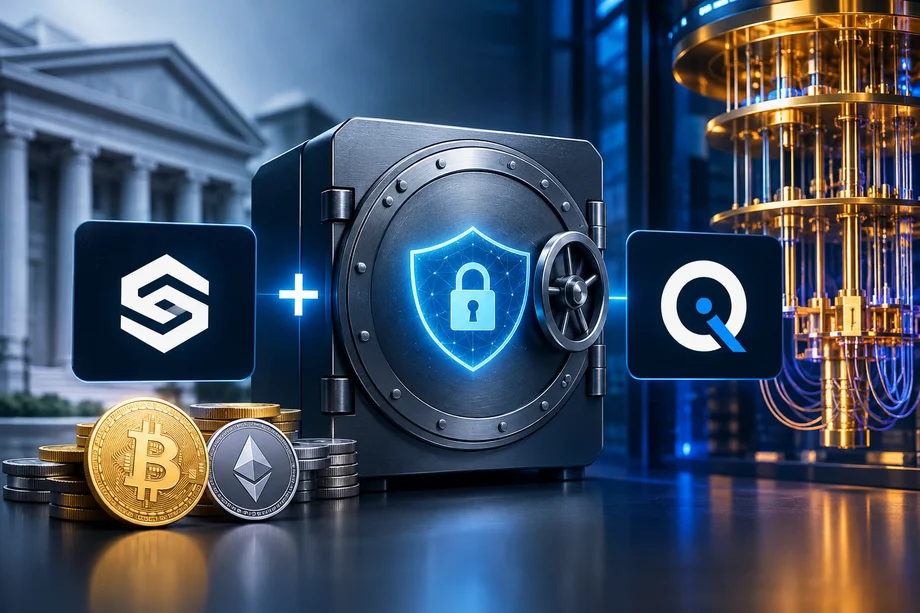
Project Eleven has named Quantus a development partner for its Strongpoint institutional custody platform, with Quantus Network integration targeted for the first quarter of 2027
Project Eleven, a firm focused on post-quantum digital asset security, announced that Quantus has joined as a development partner for Strongpoint, its institutional custody platform built for the transition to post-quantum cryptography. The companies plan to integrate the Quantus Network into Strongpoint, with support expected in the first quarter of 2027.
Quantus becomes the second development partner for the platform after the Zcash Foundation. Strongpoint is designed to address operational challenges that arise when different blockchains adopt varied post-quantum cryptographic standards on different timelines.
Crypto-Agility Approach to Custody
Traditional custody systems were built on the assumption that the cryptography protecting private keys would remain stable. Project Eleven is preparing for a different scenario in which quantum-resistant systems emerge and networks implement distinct signature schemes, migration procedures, key rotation methods, and asset recovery processes.
Of the ten blockchains that have announced post-quantum plans, approaches already span six different signature schemes. For institutions holding assets across multiple networks, this creates complexity. Banks and custodians cannot practically rebuild authentication, approval policies, key management, governance, and audit systems each time an underlying blockchain changes its cryptographic requirements.
Strongpoint separates institutional control layers from the cryptographic implementation beneath them. Authentication, transaction approval policies, key management, governance, and audit trails remain in a consistent control system. The cryptographic layer can adapt according to the specific network. Project Eleven refers to this design as crypto-agility.
Quantus will help define how this architecture operates with a network built around post-quantum security. Quantus uses the ML-DSA post-quantum signature standard, selected by the U.S. National Institute of Standards and Technology, for both key generation and transaction signing.
Timeline and Institutional Preparation
Strongpoint is scheduled for general availability in the fourth quarter of 2026, with Quantus integration following in the first quarter of 2027. The work is underway while quantum computing remains a long-term rather than immediate risk. No known system can currently extract private keys from major blockchains at scale.
The concern centers on the possibility that sufficiently powerful quantum systems could arrive while large volumes of digital assets remain protected by cryptographic assumptions that would no longer hold. For retail users, migration might involve moving funds to a new address type. For institutions, the process involves policies, hardware security modules, compliance procedures, signers, approvals, and audit systems that depend on existing key architectures.
Christopher Smith, CEO and co-founder of Quantus, noted that advances in artificial intelligence are accelerating both quantum hardware and software capabilities, adding urgency to preparation.
Industry participants treat the coming years as a window to establish migration paths for major networks rather than waiting for a quantum event to force rapid action. Project Eleven and Quantus aim to let institutions maintain established internal controls, hardware-based key storage, and audit systems even as blockchains adopt differing quantum-resistant standards.
Pruden stated that many institutions are already developing crypto migration strategies outside of blockchain consensus timelines so they are not forced into emergency transitions later. The partnership provides Strongpoint with an additional environment in which to test and refine those operational workflows.
Disclaimer
This article was generated by AI using information from multiple industry sources. It has not been reviewed or verified by a human editor and may contain inaccuracies, omissions, or misinformation. Readers are encouraged to independently verify any information before making decisions based on its content.Tired of the noise?
Let the bots trade for you.
Trade 24/7, without emotion, with data-driven strategies.
Associated articles

Quantum Computing Threat Could Strike Crypto as Ordinary Key Thefts

Coinbase Builds Flexible Post-Quantum Custody for $250 Billion in Institutional Assets

G7 Urges Immediate Shift to Quantum-Resistant Encryption as Crypto Networks Face Upgrade Pressures

Europol Warns Quantum Computers Pose Risk to Crypto Wallet Keys, Urges Early Industry Preparations

Solana Advances Quantum-Resistant Security with Quantumglow Proposal
Latest articles

UK Sanctions Crypto Platforms Linked to Russian Sanctions Evasion Networks

US Government Transfers Over $1.8 Billion in Bitcoin and Tether Across Three Days

Robinhood Explores Stock Token Tied to Actively Managed ETF With T. Rowe Price

Fidelity Says Institutional Shift to Tokenized On-Chain Finance Has No Reversal