Newsroom
Payward Prepares CFTC-Regulated Perpetual Futures on Hyperliquid for US Clients
28 October, 2026 / News / AI / Tags: ninjatrader, clearing, payward, hyperliquid, bitnomial

Kraken's parent company outlines a regulated structure using Bitnomial for market deployment and clearing alongside NinjaTrader Clearing for accounts, contingent on approvals
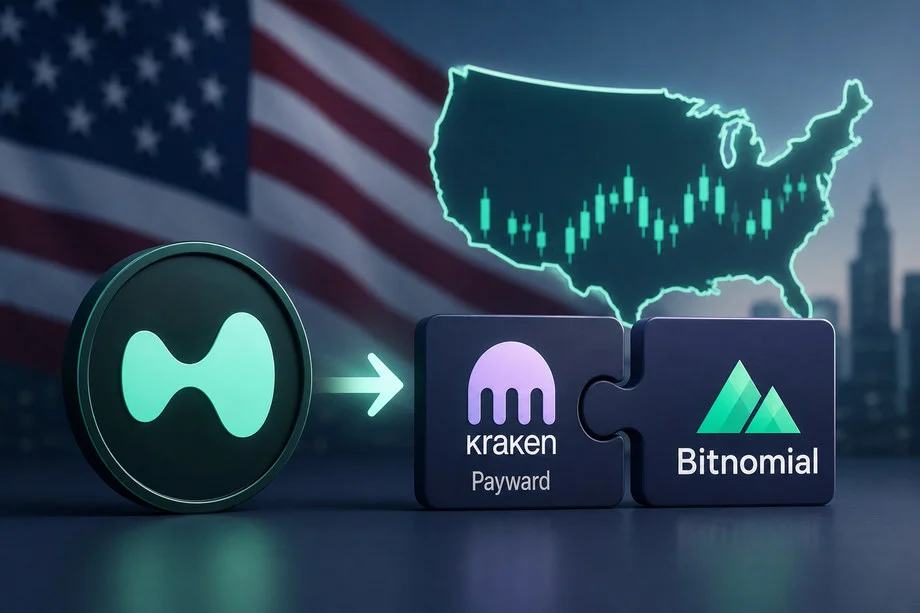
Payward, the parent company of crypto exchange Kraken, has detailed plans to introduce perpetual futures markets for eligible US traders on the Hyperliquid decentralized platform. The initiative would operate under Commodity Futures Trading Commission oversight through a multi-entity structure, though full implementation depends on securing necessary regulatory approvals.
Under the proposal, trades would match and settle on Hyperliquid’s public blockchain via its HIP-3 framework. This system allows external teams to launch custom perpetual futures markets. Payward aims to become the first CFTC-regulated HIP-3 deployer on the network, providing US clients access to these contracts within a compliant setup.
Roles of Bitnomial and NinjaTrader Clearing
Bitnomial, a Chicago-based firm registered with the CFTC as both a designated contract market and a derivatives clearing organization, would serve as the deployer. It would create, own, and administer the markets while handling clearing and settlement according to its institutional rules.
NinjaTrader Clearing, a Payward subsidiary registered with the CFTC as a futures commission merchant, would manage client accounts. Eligible US traders would complete onboarding through NinjaTrader and obtain placement on the relevant allowlists maintained by both NinjaTrader and Bitnomial.
Each entity would function under its distinct CFTC registration. Market operations and clearing would remain with Bitnomial, while account management would stay with NinjaTrader Clearing. No live markets exist under this framework at present, and specific contract details along with any launch timeline remain unannounced pending regulatory consent.
HIP-3 Features for Permissioned Access
Hyperliquid’s HIP-3 update, sometimes referenced with an asterisk in related materials, adds optional tools for market deployers. A primary capability is the creation of onchain allowlists that restrict participation in specific markets to approved addresses. Deployers or their designated sub-deployers can maintain these lists.
The functionality remains strictly additive. Existing open markets continue without alteration, and operators may choose whether to apply the permissioned controls. An initial version of the settings is already live on Hyperliquid’s testnet. Specifications are preliminary and subject to revision based on feedback, with broader network support planned for a future upgrade.
Hyperliquid positions itself as neutral infrastructure that supports varied participants across the financial system. Deployers, including those subject to CFTC rules, retain full operational control and responsibility over their markets.
Market Context and Next Steps
Perpetual futures contracts, which enable leveraged trading without fixed expiration dates, have seen limited availability for US participants due to regulatory complexity. Global trading volume in these products is projected to exceed 85 trillion USD in 2025. The Payward proposal seeks to offer an onshore alternative that combines Hyperliquid’s onchain matching and settlement with established US brokerage, clearing, and account services.
Access would be limited to clients who satisfy the onboarding and allowlist requirements of the regulated entities. Hyperliquid is expected to form the initial protocol in Payward’s planned US offerings, with possible later expansion to additional decentralized protocols or product types once the current arrangement receives clearance.
All associated contracts require formal regulatory approvals before any trading can begin. Official launch timing and detailed client procedures will be disclosed only after those approvals are obtained.

Disclaimer
This article was generated by AI using information from multiple industry sources. It has not been reviewed or verified by a human editor and may contain inaccuracies, omissions, or misinformation. Readers are encouraged to independently verify any information before making decisions based on its content.Tired of the noise?
Let the bots trade for you.
Trade 24/7, without emotion, with data-driven strategies.
Associated articles

Payward Plans Regulated Onchain Perpetual Futures on Hyperliquid for US Clients
Hyperliquid in Advanced Talks With Kraken Parent to Offer Perpetual Futures to US Traders

Coinbase Opens Regulated Crypto Futures to Eligible Canadian Investors

CFTC Greenlights Crypto Perps: Coinbase Opens Global Derivatives to US Traders

Coinbase Completes Deribit Integration to Form Unified Global Derivatives Exchange
Latest articles

Polymarket Probes Dozens of Midterm Election Bets, Refers Cases to CFTC

YieldMax Announces Weekly ETF Distributions for Oct. 28 Ex-Dividend Date

Bithumb Probes Employee System Breach Amid Rising Cyberattacks on South Korean Finance Firms

Datavault AI Stock Plunges Nearly 50% After Bitcoin Access Failure and Accounting Restatement