Newsroom
North Korea Denies Role in $6.3 Billion Binance Crypto Theft, Calls US Claims Political Provocation
3 November, 2026 / News / AI / Tags: jong, kim, north, korea, provocation
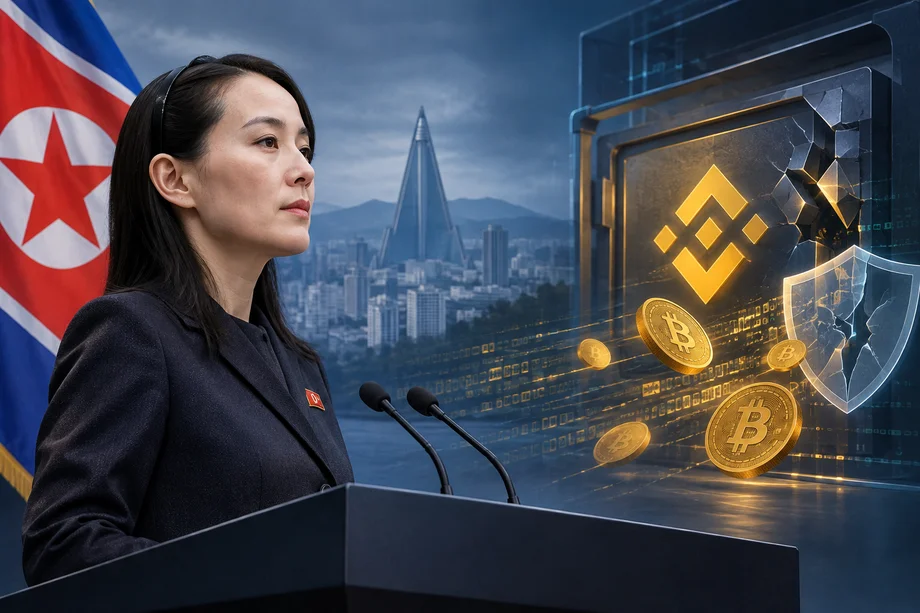
Kim Yo-jong rejects FBI attribution of the massive exchange breach to a Pyongyang-linked group and signals potential review of relations with Washington
North Korea on Tuesday firmly rejected allegations by the US Federal Bureau of Investigation that it orchestrated the theft of approximately $6.3 billion in digital assets from the Binance cryptocurrency exchange. In a statement carried by the state-run Korean Central News Agency, Kim Yo-jong, sister of leader Kim Jong-un and a senior Workers' Party official, described the claims as "absurd rhetoric and nothing new" and a "grave political provocation."
The FBI announced over the weekend that members of a North Korea-linked hacking group known as TraderTraitor were responsible for the October 29 incident at the world's largest cryptocurrency exchange by trading volume. Authorities said the actors converted much of the stolen assets into ethereum and were expected to attempt further laundering. Binance had earlier reported unauthorized withdrawals totaling about $6.3 billion, temporarily suspended withdrawals, and froze roughly $3 billion in assets during its investigation. The exchange later began restoring access in phases and reported covering most of the losses with its own funds, while noting net outflows of about $3.64 billion shortly after reopening.
Official Denial and Accusations Against Washington
Kim Yo-jong accused the United States of seeking to portray North Korea as a "cyber criminal state" and of misleading global opinion by attributing cyber incidents worldwide to Pyongyang. She insisted the Democratic People's Republic of Korea opposes malicious cyber activity and rejected efforts to damage its international standing through such accusations.
Turning attention to US policy, Kim referenced the Trump administration's stated intention to confiscate illicitly obtained cryptocurrency and place it into a strategic reserve. She suggested that examining who ultimately receives recovered assets from the Binance incident could provide insight into those behind the breach.
The statement did not specify what those issues might include. North Korea has remained publicly silent on recent US overtures regarding possible renewed summit diplomacy.
Context of the Breach and Broader Allegations
Binance discovered the unauthorized activity on October 29 and initially pointed to a possible compromised device used by a DevOps engineer before identifying additional intrusion points. The company stated it found no evidence that private keys for wallets had been leaked. The scale of the theft has been described as potentially the largest cryptocurrency heist on record.
US authorities linked the operation to TraderTraitor, a group previously associated with other major crypto thefts, including a $1.5 billion incident involving the Bybit platform. Cybersecurity researchers and blockchain analytics firms have long attributed a significant share of global cryptocurrency hacks to actors linked to North Korea, with proceeds alleged to support weapons development programs. North Korea consistently denies such accusations.
South Korean estimates place North Korea's 2025 gross domestic product at roughly $35 billion, illustrating the relative size of the reported Binance losses. Analysts have noted that crypto thefts represent one of the few remaining channels for revenue under existing international sanctions.
Diplomatic Implications and Expert Assessments
The speed and high-level nature of Kim Yo-jong's response drew attention in Seoul. South Korean officials described her personal intervention in a cybersecurity matter as unusual and suggested it indicated heightened sensitivity to international perceptions. Analysts interpreted the carefully worded conclusion of the statement as an effort to leave room for potential diplomatic engagement while cautioning against the use of cyber allegations as leverage.
Experts noted that additional measures targeting cryptocurrency wallets, laundering networks, or exchanges could further constrain revenue streams important to the North Korean government. At the same time, the restrained tone of the denial was seen by some as calibrated messaging aimed at preserving options for future contacts with Washington.
Binance has continued its phased restoration of services while investigating the full scope of the intrusion. The FBI has published lists of associated wallet addresses and urged industry participants to block related transactions.
Disclaimer
This article was generated by AI using information from multiple industry sources. It has not been reviewed or verified by a human editor and may contain inaccuracies, omissions, or misinformation. Readers are encouraged to independently verify any information before making decisions based on its content.Tired of the noise?
Let the bots trade for you.
Trade 24/7, without emotion, with data-driven strategies.
Associated articles
FBI Attributes Record $6.3 Billion Binance Crypto Theft to North Korean Hackers
North Korean Lazarus Group Suspected in $6.3 Billion Binance Hack

Binance Partners With FBI and Secret Service After $6.3 Billion Security Breach
Trump Flags Digital Transfer Risks as White House Probes $6.3 Billion Binance Theft

North Korean Hackers Drive 85% of 2026 Crypto Thefts, Stealing $7.4 Billion
Latest articles

Tom Lee Says AI Stocks Have Bottomed, Points to Tight Supply and Crypto Resilience

GenLayer Deploys AI Juries to Settle Agent Contract Disputes via Internet Court

China's Communist Party Targets Crypto and Blockchain in Corruption Crackdown

Schwab Bond ETFs Announce November Distributions Payable November 6