Newsroom
Musk Warns Over 200 AI Neoclouds Face Failure and Consolidation as Financing Tightens
26 October, 2026 / News / AI / Tags: neoclouds, musk, neocloud, specialist, cloud
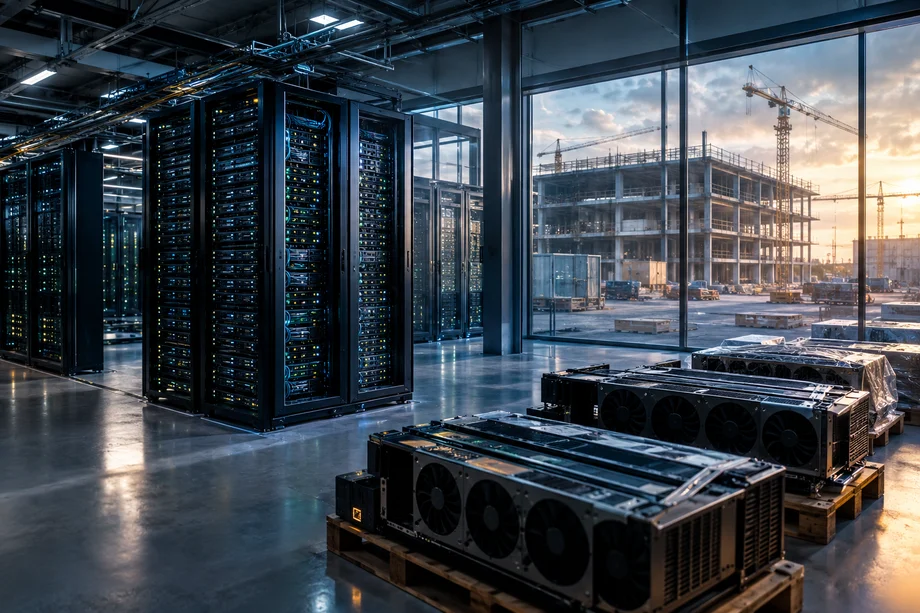
Elon Musk says lenders have largely halted funding for specialist AI cloud firms lacking diversified revenue, predicting widespread failures while larger players with broader income streams secure capital
Elon Musk has cautioned that more than 200 specialist AI cloud providers, known as neoclouds, are likely to encounter severe pressure leading to failures or consolidation. The comments came as lenders grow more selective, restricting financing primarily to companies that generate substantial revenue outside AI data center operations.
A neocloud refers to a company focused on renting out computing power optimized for artificial intelligence workloads, typically through data centers equipped with large numbers of high-performance GPUs. These firms have expanded rapidly to meet demand for AI training and inference capacity.
Financing Shift Favors Diversified Operators
Musk stated that lenders have largely stopped providing financing to entities without meaningful revenue streams beyond their AI infrastructure businesses. He contrasted this environment with SpaceX, which secured $40 billion in debt financing for GPUs. The company obtained the capital due to its investment-grade status and income from Starlink satellite internet services as well as its rocket operations.
The remarks highlight a change in credit conditions for the sector. Specialist providers that rely almost exclusively on AI computing services now face higher barriers to raising the large sums required for GPU purchases and data center expansion.
Industry Forecast Points to Widespread Consolidation
Research firm Gartner has projected that more than 80 percent of neocloud providers will cease operating independently by 2030. The forecast stems from challenges in generating adequate returns on the substantial capital invested in AI infrastructure.
Gartner anticipates that AI providers will spend nearly $1 trillion on infrastructure in 2026, followed by an additional $6 trillion between 2027 and 2030. Despite this outlay, the firm indicated there is insufficient revenue across the industry to produce profitable returns on all of those investments.
Larger cloud operators hold an advantage through diversified revenue sources that can support AI-related spending over extended periods. Specialist neoclouds, by comparison, must generate enough income directly from AI computing services to maintain operations and service any debt.
Even projected market growth may prove inadequate for many participants. Spending on AI-optimized infrastructure-as-a-service is expected to increase from $66 billion in 2027 to $174 billion in 2030. However, most providers could struggle to recover their investments before the current generation of AI chips is superseded by newer hardware.
Implications for Crypto-Linked Infrastructure
The tighter financing environment carries potential consequences for Bitcoin mining companies that have shifted toward AI-related services. Some operators have expanded into renting computing capacity or providing data center hosting for neocloud customers.
Firms such as IREN have moved into AI cloud services by offering computing power to clients. Core Scientific has supplied data center hosting to neocloud operators including CoreWeave. Reduced independence among neoclouds or constrained funding could alter demand for hosted capacity, potentially leading to contract renegotiations or a concentration of business among better-capitalized platforms.
SpaceX Reports Strong AI-Related Growth
Musk’s comments followed recent figures from SpaceX showing sharp expansion in its Super Intelligence segment. That business generated $7.6 billion in third-quarter revenue, an increase of 830 percent from the prior year, and represented more than half of the company’s $14.6 billion in total quarterly sales.
SpaceX linked the rise to new cloud services agreements, its acquisition of Cursor, and greater use of its Grok AI model. The performance illustrates how diversified operations can support large-scale AI infrastructure investment under current lending conditions.
As credit standards remain selective, the ability of specialist providers to demonstrate durable revenue beyond pure AI compute services is expected to play a central role in determining which operators continue independently and which face merger or exit.
Disclaimer
This article was generated by AI using information from multiple industry sources. It has not been reviewed or verified by a human editor and may contain inaccuracies, omissions, or misinformation. Readers are encouraged to independently verify any information before making decisions based on its content.Tired of the noise?
Let the bots trade for you.
Trade 24/7, without emotion, with data-driven strategies.
Associated articles

Bitcoin Miners Invest Billions in AI Infrastructure as Returns Trail Spending

Hyperscale Data Halts Michigan Bitcoin Mining for AI Data Center Shift

Bitcoin Miners Face Uneven AI Financing Costs as Lenders Tighten Terms

Robinhood Ventures Invests $25 Million in Crusoe as AI Pivot Drives $30.9 Billion Valuation

Riot Platforms Shares Rise After Securing $9.1 Billion AI Compute Agreement
Latest articles

BloomTrading Pledges Refunds After Nearly $1 Million in Solana Wallet Drains

Jio Platforms Finalizes IPO Allotment Ahead of October 28 Market Debut

Monero Developer Seeks 45 XMR for Privacy and Wallet Upgrades

BNB Chain Proposes New High-Speed Layer 1 Sharing BNB Token With Existing Network