Newsroom
Lighter Token Climbs More Than 20% on Planned CFTC Filing and Research Note
22 October, 2026 / News / AI / Tags: lighter, robinhood, futures, delphi, perpetual
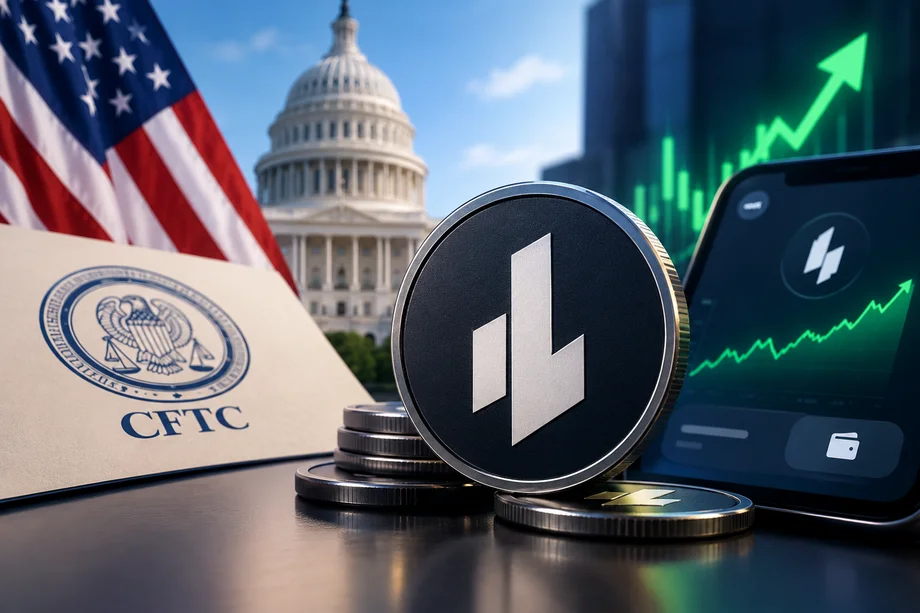
LIT advanced sharply after the perpetual futures platform disclosed a November application for U.S. derivatives licenses and appeared in a Delphi Digital report on speculative trading venues
The token of decentralized exchange Lighter, known as LIT, rose more than 20 percent in a 24-hour period to trade near $3.90, extending a seven-day advance of roughly 23 percent. The move came as the platform outlined plans to seek Commodity Futures Trading Commission approval for its on-chain perpetual futures markets and after a research firm highlighted its business model.
Price Action and Market Context
LIT posted gains of approximately 21 to 22 percent over 24 hours, reaching levels between $3.83 and $3.91 depending on the snapshot. Trading volume during the period exceeded $125 million. The token ranked among the strongest performers among the largest cryptocurrencies by market capitalization, even as broader digital-asset prices showed mixed results. Circulating supply stood near 250 million tokens against a maximum of 1 billion. The seven-day rise left LIT still well below its December 2025 peak of $7.86.
November CFTC Application Plans
During its third-quarter investor update call on October 21, Lighter founder and chief executive Vladimir Novakovski stated that the company intends to file applications with the CFTC in November 2026. The filings would seek Designated Contract Market and Derivatives Clearing Organization licenses. The goal is to operate a regulated venue for on-chain perpetual futures contracts, which have no fixed expiration date.
Novakovski said the team has been in discussions with CFTC staff for about 11 months regarding how existing rules apply to on-chain trading and clearing. The initial focus would be U.S. institutional clients rather than retail users. After a formal submission, the regulator has up to 280 days for review. Approval is not assured, and the process could extend into mid-to-late 2027. Lighter positions the move as an effort to become the first decentralized exchange offering on-chain perpetual futures under CFTC oversight.
Robinhood Wallet Integration and Distribution
Lighter already provides perpetual futures trading through an integration with Robinhood Wallet that launched in July 2026. The service is available to eligible users in selected jurisdictions outside the United States and uses USDG as collateral, with a 50-50 revenue split between the parties. Robinhood allocated 11 million LIT tokens to a rewards program for participants. Eligible traders earn double points for futures activity conducted via the wallet compared with the platform’s web interface.
Robinhood Ventures participated in Lighter’s $68 million funding round in November 2025, which valued the company at approximately $1.5 billion. Robinhood chief executive Vlad Tenev serves as an adviser. The current wallet offering excludes residents of the United States and several other countries. One company update indicated an intention to pursue broader integration with Robinhood’s primary U.S. investment platform following any regulatory approvals.
Platform Operations and Volume
Lighter operates as an order-book perpetual futures exchange on its own zero-knowledge rollup, zkLighter, with settlement on Ethereum. Standard retail accounts face zero trading fees, and major pairs support leverage of up to 50 times. Lighter Core has surpassed 1 million accounts. Third-quarter trading volume exceeded $137 billion, with $8.55 million in revenue directed toward token buybacks and burns.
A Delphi Digital report published October 20 examined platforms that generate revenue from speculative trading. It listed Lighter alongside other venues and noted roughly $56 billion in 30-day volume based on early October data. The research cited the zero-fee retail structure and the Robinhood distribution arrangement as factors supporting the business model. The report described Lighter’s markets as covering cryptocurrencies as well as stocks, commodities and foreign exchange.
Next Steps and Outstanding Questions
The November filing remains a stated plan rather than a completed submission. U.S. retail access is not part of the initial institutional focus. The existing Robinhood Wallet integration continues to operate under its current geographic restrictions. Token vesting schedules for team and investor allocations, representing half of total supply, are set to begin in late January 2027, with the first monthly release covering about 13.5 million tokens. Market participants will watch for the actual application, any regulatory feedback and further developments on distribution partnerships.
Disclaimer
This article was generated by AI using information from multiple industry sources. It has not been reviewed or verified by a human editor and may contain inaccuracies, omissions, or misinformation. Readers are encouraged to independently verify any information before making decisions based on its content.Tired of the noise?
Let the bots trade for you.
Trade 24/7, without emotion, with data-driven strategies.
Associated articles
Lighter Token Tumbles Below $4 as Robinhood Routes U.S. Perps to Bitstamp
Pons Surges to $5.95M Daily Fees on Robinhood Chain as Uniswap Labs Acquires Token Stake
RWA Perpetual Futures Approach Bitcoin Trading Volumes on Major Platforms

Robinhood Chain Posts $2.66 Million in Daily App Revenue, Surpassing Ethereum and Hyperliquid
Uniswap Trader Activity Explodes to 220K on Robinhood Chain
Latest articles

Samsung and SK Hynix Upgrade China NAND Factories Amid AI Demand and Local Rivalry

China Prosecutors Move to Confiscate $5.1 Billion Bitcoin Haul Seized in UK Fraud Case

Bank of Korea Holds Rate at 3% After Consecutive Hikes, Eyes Data for Next Move

Starknet Community Approves Research Into Independent Post-Quantum Layer 1