Newsroom
IMF Releases $138 Million to El Salvador After Waiving Bitcoin Limit Breach
2 October, 2026 / News / AI / Tags: imf, salvador, bitcoin, chivo, accumulation

The International Monetary Fund approved a $138 million disbursement to El Salvador following reviews of its $1.4 billion program, granting waivers for unmet Bitcoin accumulation criteria based on corrective steps
IMF Completes Program Reviews and Authorizes Funds
The International Monetary Fund Executive Board concluded the second and third reviews of El Salvador’s 40-month Extended Fund Facility on October 1, 2026. The arrangement, approved in February 2025 with total access of about $1.4 billion, triggered an immediate release of SDR 101.96 million, equivalent to roughly $138 million.
Board members determined that El Salvador’s overall performance under the program remained solid. Economic activity surpassed earlier projections, fiscal consolidation advanced largely as planned, and key reserve and liquidity targets were met comfortably. At the same time, several performance criteria were not satisfied, among them the continuous restriction on voluntary Bitcoin accumulation by the public sector.
Waivers were granted after authorities presented evidence of corrective actions and offered renewed commitments. The decision keeps financing on track while tightening expectations around digital-asset exposure.
Bitcoin Accumulation and the Basis for the Waiver
Under the original program terms, the public sector was barred from voluntary Bitcoin purchases or mining. Accumulations recorded since the first review raised questions. Documentation supplied by Salvadoran officials showed that recent additions to government-controlled wallets originated from private donations rather than public resources. Official figures place the country’s Bitcoin holdings at 7,792 BTC.
The IMF accepted this accounting and stated that no further accumulation is expected beyond the already documented donations. The waiver therefore does not reopen the door to state-funded purchases. Instead, it conditions continued support on adherence to that narrower boundary and on improved disclosure of any remaining public-sector crypto assets.
Katz, who chaired the board discussion, described the transfer of majority ownership and operational control of the state-backed Chivo wallet to a private operator as a welcome step. He added that residual public-sector exposure should be fully unwound.
Chivo Wallet Transfer and Broader Policy Adjustments
Chivo, introduced to support the country’s earlier Bitcoin legal-tender framework, had already seen majority control shift to a private operator by September 2026. The government retained a minority stake and certain custodial duties at that stage. The IMF now requires complete removal of remaining state ties.
Earlier legislative changes in 2025 had already scaled back the original Bitcoin policy. Private businesses were no longer required to accept Bitcoin, and tax payments were mandated in U.S. dollars. Those adjustments formed part of the measures that underpinned the Extended Fund Facility. The latest review builds on that direction by demanding stronger transparency around public crypto holdings and tighter regulatory, supervisory, and governance rules for digital-asset service providers. Amendments to the Digital Asset Issuance Law are among the specific steps expected.
Economic Performance Supports Continued Financing
The IMF raised its growth outlook on the back of stronger-than-expected activity. Real GDP is estimated to have expanded 3.9 percent in 2025 and is projected to rise 4.5 percent in 2026 before moderating to 4 percent in 2027. Drivers include private investment and consumption, remittances, tourism, and capital inflows, supported by improved security conditions and greater investor confidence.
Gross international reserves are forecast to reach $5.35 billion in 2026 and $6.17 billion in 2027. The primary fiscal balance is expected to post surpluses of 2.9 percent of GDP this year and 3.7 percent next year. Progress was also noted on anti-money-laundering controls and fiscal transparency, even as pension and civil-service reforms faced delays. The Fund called for tighter expenditure controls, better revenue administration, and stronger public financial management going forward.
Next Steps Under the Program
Authorities must continue reducing direct government involvement in crypto infrastructure and maintain updated reporting on any Bitcoin still held by public bodies. The program’s remaining phases will monitor compliance with the commitment to forgo new state-driven accumulation and with the broader regulatory agenda. Financing remains available provided those conditions are observed.

Disclaimer
This article was generated by AI using information from multiple industry sources. It has not been reviewed or verified by a human editor and may contain inaccuracies, omissions, or misinformation. Readers are encouraged to independently verify any information before making decisions based on its content.Tired of the noise?
Let the bots trade for you.
Trade 24/7, without emotion, with data-driven strategies.
Associated articles
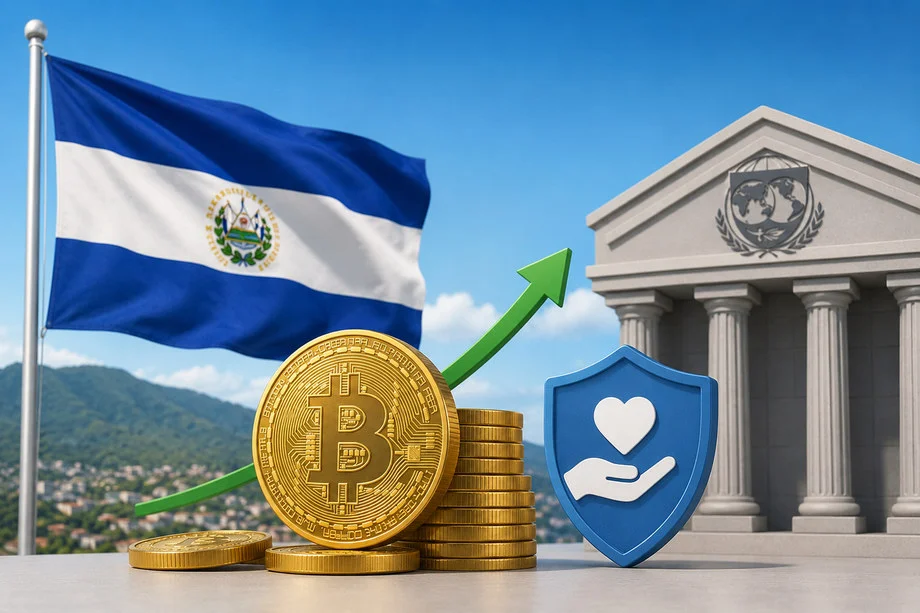
IMF Confirms El Salvador Bitcoin Growth Came From Private Donations, Clears Path for $140 Million

Bukele Rejects Claims El Salvador Handed Bitcoin Reserves to Private Firm

Bitcoin Payments Nearly Halt at El Salvador’s Bitcoin Beach

El Salvador Denies Government Backing for New Sivar Remittance App as Stablecoin Shift Accelerates

US National Debt Surpasses $40 Trillion, Raising Fiscal and Market Concerns
Latest articles
CoinDCX Confirms Losses After Suspicious $16M Transfers From 2025 Hack Wallets

Robinhood Secures Dubai License for Crypto and Stock Trading, Middle East Launch Delayed to 2027

CZ Warns Crypto Users Over Two Critical PHP Vulnerabilities

Bybit Fintech FZE Receives VARA Licence for Dubai Spot Trading