Newsroom
Bitcoin Nears $66K as Trump Iran Peace Deal Eases Geopolitical Tensions
15 June, 2026 / News / AI / Tags: iran, difficulty, bitcoin, oil, trump

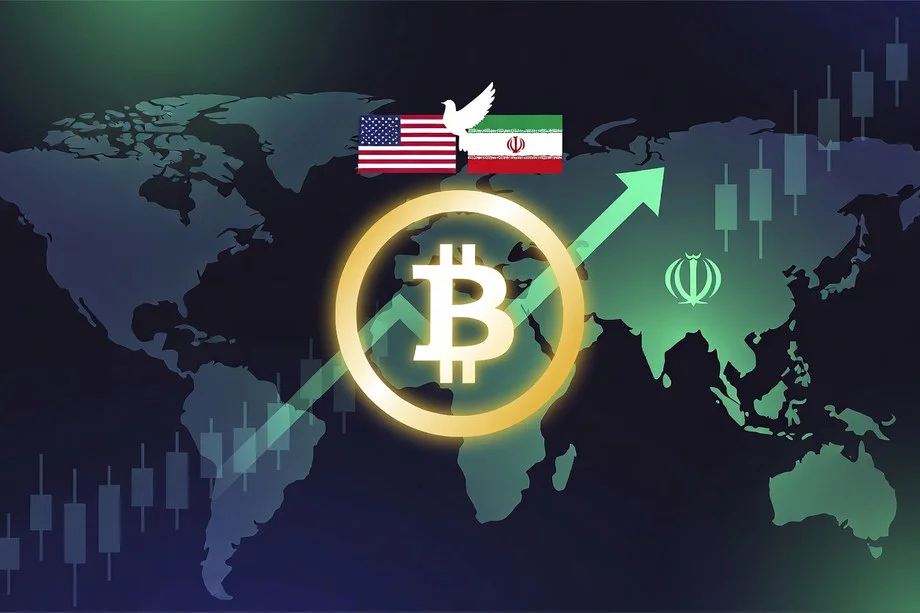
Bitcoin climbed close to $66,000 following President Donald Trump's announcement of a completed peace agreement with Iran that opens the Strait of Hormuz to oil shipments, removing a key risk factor that had weighed on markets since February
Trump's Announcement Sparks Market Rally
Bitcoin advanced toward $66,000 on Monday after US President Donald Trump declared that a peace deal with Iran was finalized. The agreement, mediated by Pakistan and set for signing on Friday, includes the toll-free reopening of the Strait of Hormuz and the removal of the US naval blockade.
Trump shared the update on his Truth Social platform, stating: “The deal with the Islamic Republic of Iran is now complete. Congratulations to all!” He further authorized the immediate opening of the strait, urging global shipping to resume oil flows.
The development comes amid ongoing volatility in crypto markets, with Bitcoin having traded below $60,000 briefly earlier in the month before recovering. The asset remains significantly below its all-time high above $126,000 recorded in October.
Geopolitical Relief Boosts Risk Assets
The potential end to hostilities in the region has reduced uncertainty tied to oil supply disruptions. Analysts noted that the deal removes a major geopolitical risk premium, encouraging traders to rotate back into risk assets like cryptocurrency.
Oil prices responded sharply, with WTI Crude falling around 5% to levels near $80 per barrel, its lowest since early March. Brent Crude saw a similar decline.
Iran’s officials also confirmed aspects of the agreement, with the war expected to end immediately and the blockade terminated in full.
Mining Difficulty Adjustment Provides Additional Support
Bitcoin mining economics received a boost over the weekend following a significant 10.09% drop in network difficulty on Sunday. This marked the 11th-largest downward adjustment in Bitcoin’s history and the second biggest of 2026.
Difficulty fell from 138.96 trillion to 124.93 trillion hashes at block 953,568. The adjustment reflects miners going offline amid recent price pressure, with total hashrate down around 12% this month. The change lifted hashprice by approximately 13%, helping more operations approach breakeven levels.
- Difficulty drop: 10.09%
- New difficulty: 124.93 trillion
- Hashrate: Near 886 EH/s
- Next adjustment: June 27
Upcoming Central Bank Decisions Add Uncertainty
While the Iran deal provided positive momentum, attention is shifting to major central bank actions. The US Federal Reserve is scheduled to announce its interest rate decision on Wednesday, the first under new Chair Kevin Warsh. Markets assign a high probability of rates remaining unchanged amid persistent inflation above 4%.
In Asia, the Bank of Japan is expected to raise its benchmark rate to 1% from 0.75% on Tuesday. This move carries implications for global carry trades and risk assets, as leveraged positions in the yen have reached notable levels.
Broader Market Context and Institutional Adoption
Beyond immediate price action, Bitcoin continues to gain traction as collateral in traditional finance. Recent examples include Bitcoin-backed insurance facilities and structured credit products, with institutions exploring its use for lending and reserves.
Michael Saylor of Strategy (formerly MicroStrategy) has introduced new treasury metrics to track Bitcoin holdings performance relative to leverage and obligations. The company maintains a substantial Bitcoin position despite market fluctuations.
Support levels are noted around $64,787 and $61,835, while resistance sits near $65,897 and $68,138. Derivatives data shows moderate positioning with funding rates remaining low.
The broader crypto market capitalization rose alongside Bitcoin, with select altcoins posting stronger gains. Market sentiment remains cautious overall, reflected in fear and greed indices, but the combination of geopolitical easing and mining adjustments offers potential tailwinds.
Disclaimer
This article was generated by AI using information from multiple industry sources. It has not been reviewed or verified by a human editor and may contain inaccuracies, omissions, or misinformation. Readers are encouraged to independently verify any information before making decisions based on its content.Tired of the noise?
Let the bots trade for you.
Trade 24/7, without emotion, with data-driven strategies.
Associated articles

Trump Declares Iran Peace Deal Set for Sunday Signing

Bitcoin Drops Below $63,000 as US-Iran Strikes Push Oil Higher

Oil Prices Plunge as Trump Confirms Monday Talks with Iran on Hormuz

Trump Cancels Iran Strikes as Markets Surge $1.2 Trillion on Near-Deal Breakthrough
Bitcoin Rebounds to $81K as US-Iran Peace Proposal Gains Traction Amid Volatile Tensions
Latest articles

SpaceX and Tesla Set Up Committees to Explore Merger That Would Combine Holdings of Over 30,000 Bitcoins

UK Banks Face Thousands of Complaints Over Crypto Transfer Restrictions

Ripple Backs SEC Proposed Crypto Asset Rules After $150 Million Legal Battle

Blockchain.com Introduces Options Trading on Seven Major Crypto Assets