Newsroom
Apple Launches U.S. Study to Assess User Trust in Health AI Answers
16 November, 2026 / News / AI / Tags: health, apple, openevidence, study, medical
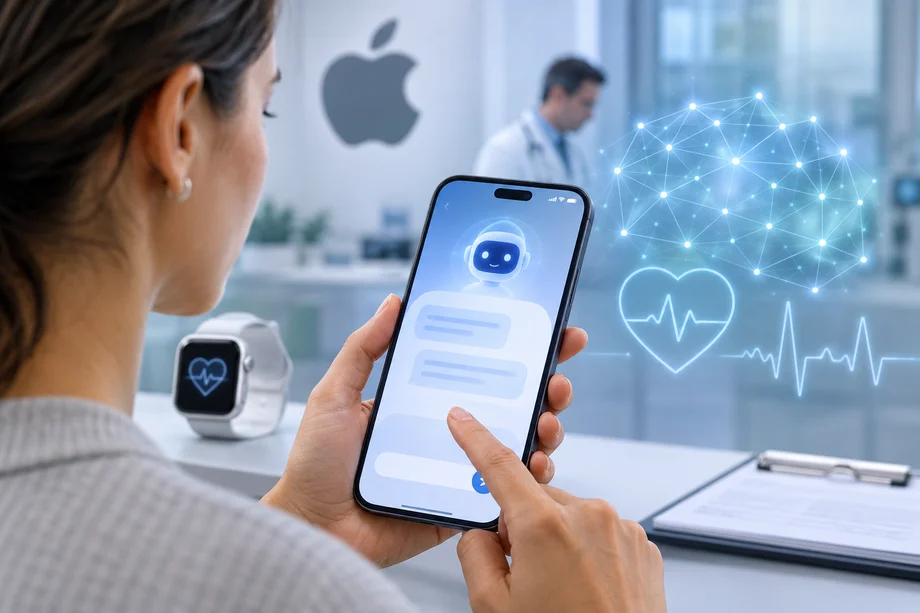
Apple has opened an app in the United States for a research project that will track how people use and evaluate answers from health-focused AI tools
Apple Expands Health AI Study with New App and Recruitment Target
Apple has made available a dedicated app for users in the United States to participate in a research initiative examining the application of AI in addressing everyday health inquiries. The company is targeting enrollment of up to 200,000 participants who must be 21 years or older, possess an iPhone 15 or later model, run iOS 26 or a later version, and have Apple Intelligence enabled. The program is expected to run for more than 12 months.
Participants gain access to a tool that accepts natural-language queries about health topics and delivers responses based on clinical evidence sources, including publications from The New England Journal of Medicine, the Journal of the American Medical Association, and Nature. Users can provide ratings for each answer, submit feedback, and complete monthly surveys. The system also pulls data from Apple’s HealthKit, such as resting heart rate, physical activity levels, sleep patterns, and laboratory results, to generate tailored recommendations.
The initiative operates in partnership with OpenEvidence, a healthcare AI specialist. During the study, responses are anonymized prior to transmission to a secure third-party cloud storage service. Data collected will not serve for training any AI models, and OpenEvidence removes query and response records after 24 hours.
Supported by OpenEvidence
Uses clinical sources including The New England Journal of Medicine, JAMA, and Nature
Data Practices and Study Scope
The app is designed to help users prepare for medical appointments by offering simplified explanations of potential conditions or treatments. It can also direct individuals to appropriate healthcare providers for specific concerns. By incorporating real-time health metrics, the platform aims to produce more relevant and context-aware outputs.
Apple Intelligence underpins the overall functionality, ensuring that answers remain grounded in verified medical literature rather than speculative or unverified content. This approach addresses concerns around the reliability of AI-generated health information by prioritizing transparency and user oversight through ratings and surveys.
Partnership and Privacy Measures
Through its collaboration with OpenEvidence, Apple is testing a model for integrating AI into consumer health tools while maintaining strict data safeguards. The 24-hour deletion policy for raw interactions, combined with anonymization steps, reflects a focus on privacy protection. Such measures are intended to build confidence among participants when engaging with AI for potentially sensitive health matters.
The study scope is limited to the United States to gather region-specific insights into user behavior and trust levels. By recruiting a large cohort, Apple intends to analyze patterns in how individuals interact with these tools and adjust future iterations accordingly. No financial incentives or details regarding compensation have been disclosed in the announcement.

Disclaimer
This article was generated by AI using information from multiple industry sources. It has not been reviewed or verified by a human editor and may contain inaccuracies, omissions, or misinformation. Readers are encouraged to independently verify any information before making decisions based on its content.Tired of the noise?
Let the bots trade for you.
Trade 24/7, without emotion, with data-driven strategies.
Associated articles

Latest articles

Strategy Adds 485 Bitcoin While Spending $228 Million on Preferred Share Buybacks

Bitmine Nears 5% of Ethereum Supply With Fresh 7,653 ETH Purchase

Solana Retires Mainnet Beta Label After Six Years, Adopts Protocol Version 1.0

Morgan Stanley Declares Quarterly Dividends Across Multiple Preferred Stock Series