Newsroom
Acala and Karura Plan Network Shutdown for February 10, 2027 Pending Governance Votes
10 November, 2026 / News / AI / Tags: acala, karura, polkadot, kusama, ausd
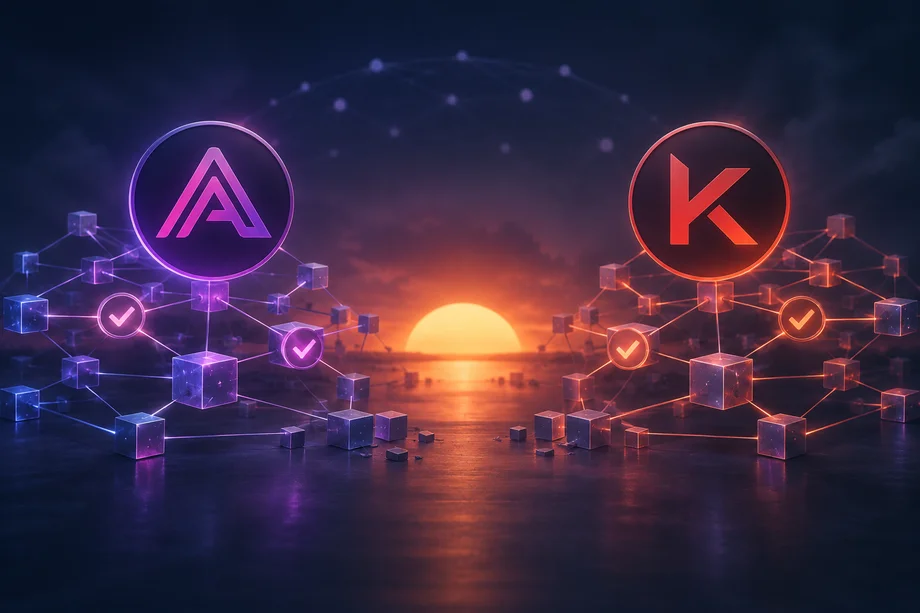
Polkadot and Kusama DeFi parachains seek community approval to end block production after years of limited liquidity growth
Acala, a Polkadot parachain, and its Kusama counterpart Karura have put forward proposals to halt block production on February 10, 2027. The plans require approval through separate governance referendums that opened on November 9, 2026. Acala Referendum #195 and Karura Referendum #137 will determine whether the networks proceed with the shutdown.
Both chains ranked among the earliest winners of parachain auctions in their respective ecosystems and spent nearly seven years building decentralised finance products. These included exchanges, stablecoins and liquid staking services. The development team stated that the liquidity required to support these products at scale never materialised.
Reasons Behind the Proposed Closure
In a community letter, the team described how Polkadot’s multichain design split users, capital and attention across multiple parachains. Wallet tools also failed to deliver seamless transfers between chains. The result, according to the team, was a series of shallow markets rather than one deep pool of liquidity.
The networks have operated largely in maintenance mode in recent periods, with limited protocol upgrades or growth. The team concluded that sustaining independent DeFi ecosystems under these conditions had become impractical.
Asset Withdrawal Requirements and Deadlines
Users holding external assets on either network are instructed to withdraw them before the proposed February 10, 2027 deadline. Assets covered include Polkadot’s DOT, Kusama’s KSM, Tether’s USDT and USD Coin. Native ACA tokens on Acala and KAR tokens on Karura cannot be withdrawn and will remain on their respective chains.
Liquid staking positions carry earlier cut-offs because of unbonding periods. Holders of ordinary LDOT must request unstaking by January 12, 2027 to allow the 28-day release window. LDOT locked to specific validators must first unlock by December 16, 2026. LKSM holders need to begin unbonding by February 2, 2027 to account for the shorter seven-day KSM unbonding period.
Users with aUSD or aSEED loans must repay those positions and free collateral before transferring assets. Liquidity providers are required to remove their liquidity, and lcDOT holders are directed to use the Acala or Euphrates applications for withdrawals.
The team plans to keep collators, RPC nodes and coretime active until the shutdown date so that withdrawals and cross-chain routes remain available during the exit window. For any external assets left behind, an attempt will be made on February 10 to return them to the same owners’ accounts on the Polkadot or Kusama Asset Hub. The process carries no guarantee that every asset can be recovered. External assets held by the Acala treasury would be donated to the Polkadot Treasury, while Karura’s would go to the Kusama Treasury.
Current Liquidity Levels
Data from November 8 and 9, 2026 showed Acala’s DeFi total value locked near 234,000 to 257,000 USD, with its liquid staking product holding about 1.73 million USD. Karura’s DeFi total value locked stood around 44,200 USD. Across the wider Polkadot ecosystem, total value locked measured approximately 84.9 million USD, with larger concentrations in other parachains.
The Polkadot relay chain itself is unaffected and will continue operating regardless of the outcome of the Acala and Karura votes.
Background on the aUSD Incident
The team also referenced the August 2022 aUSD minting incident, which stemmed from a configuration error in a newly launched liquidity pool. Nearly all of the excess minted tokens were recovered and burned, and the foundation covered remaining shortfalls with its own funds. Although circulating aUSD later returned to full collateralisation, the episode left lasting effects on user confidence in the stablecoin.
Community replies to the shutdown announcement included concerns about earlier crowdloan outcomes, remaining stablecoin holdings and the planned treasury donations. The team stated it will never initiate direct messages, request seed phrases or private keys, or ask users to send funds during the wind-down process.
Final decisions rest with the governance votes. Users are advised to monitor referendum results and follow official withdrawal guidance to manage their positions ahead of the proposed deadlines.
Disclaimer
This article was generated by AI using information from multiple industry sources. It has not been reviewed or verified by a human editor and may contain inaccuracies, omissions, or misinformation. Readers are encouraged to independently verify any information before making decisions based on its content.Tired of the noise?
Let the bots trade for you.
Trade 24/7, without emotion, with data-driven strategies.
Associated articles
Coinbase Rolls Out Wrapped Zcash and Hyperliquid Tokens on Base Network

Polkadot Community Votes on Native DOT-Backed Stablecoin dotUSD

Dango Closes Perp DEX and Layer-1 Network After Liquidity Shortfalls

Polkadot Foundation Warns of Private Key Exposure in Fearless Wallet Browser Extensions

Recall Foundation to Wind Down Operations and Burn 35.86% of RECALL Tokens
Latest articles
Injective Network Halts Block Production for Second Time in Ten Weeks

Binance Founder Rejects 335 Million Record Theft Claim as Fake Scam
CertiK Calls for Hard Dollar Caps on Hot Wallets of Crypto Exchanges
BitFuFu Adds 66 BTC to Holdings as Mining Output Slumps